Search This Blog

Showing posts with label Environment. Show all posts

Tuesday, 7 March 2023

Pork and Profits - How Big Business Destroys Living Beings


This absolute unit of a pig is an example of the Baston pig, known to many as the Lincolnshire Curly Coat. This breed of pig originated in Lincolnshire and was bred for smallholders, its thick coat very similar to the wool of a sheep protected it from the weather and its large size maximised its meat yield. It is sadly now extinct, it became rare in the UK after the Second World War and in its native habitat of Lincolnshire it survived until the 1970s (see addendum for information on the last known example of the breed) the reason for the decline was economic.

In 1954 Britain finally ended its war time rationing system and began to return to a more normal market economy. As a consequence British governmental and economic authorities became focused on making British products competitive on the international market. In 1955 a committee was formed to look at the state of Britain's pig production and breeding, chaired by Sir Harold Howitt - the Howitt report - it recommended that farmers move away from diversity of breeds with 16 distinct breeds being common in the British farming at that point and focus on breeding just three, the Welsh pig, the British Landrace and the Large White. The remaining 13 breeds went into extreme decline with 3 breeds the Cumberland, the Dorset Gold Tip and of course the Lincolnshire Curly Coat died out entirely. 

 In the first place we have formed the view that one of the main handicaps facing the British pig industry today is the diversity of the type of pig which is found throughout the country. The pig industry will in our view only make real progress when it concentrates on a few main types and  - if it were at any time found possible – on a single type of pig for commercial production.”

This isn't a unique story, the sad truth is that there are many species both wild and domesticated that have gone extinct or are at extreme risk of extinction due to human economic priorities. The UK is also unfortunately a place that has depleted a lot of its natural wealth with many indigenous species over hunted or exterminated as pests. In addition to losing those species this also causes a knock on effect on the wider environment. However, in recent years there has been increased support for the preservation and re-introduction of endangered species into habitats it once flourished in. The Beaver is enjoying a gradual comeback throughout Europe with small populations being established in Scotland, Wales and England, as an example and there have been years long discussions about whether or not the European Lynx and even the Wolf should be brought back to British soil. 
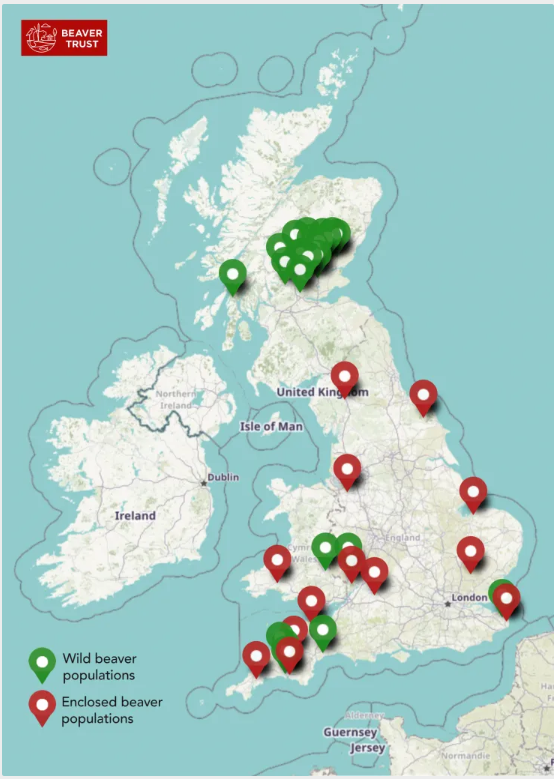
From the Beaver Trust

And over the years some have claimed that the Lincolnshire Curly Coat has returned. Sadly, that is not the case, the UK does have small pockets of Curly Coated pigs now, however they're Hungarian Curly Coats. The Hungarian Curly Coat or Mangalica as its called in its homeland is also a pig with a distinctive curly coat, but its a distinct breed in and of itself. The Mangalica dates back to the 1830s, it was a very common pig breed in the Kingdom of Hungary but it also faced a serious decline after the Second World War. By 1991 it was critically endangered with perhaps as few as 200 pigs surviving. Conservationists will be happy to learn that its popularity rebounded and there are now several tens of thousands of the Mangalica in the world today. 

A Mangalica

The Mangalica was imported into the UK for the first time in 2007, and can be seen in several wild life parks and rewilding areas. This year Doddington Hall imported some Mangalica to serve as a team of "eco pigs" to improve the range of plant and insect life on its grounds. This is part of a process of returning animal species that used to preform an important function in the life cycle of a whole environment. When the species that performed this sort of niche in the chain has died out entirely there has been some success in introducing similar species. European which were slightly different from the extinct British Bison are also being introduced into Scotland and England for a similar reason. So, Curly pigs may return as an established part of the British countryside after all, though they will likely remain confined to rewilding projects for the foreseeable future rather than the farmyard.

There is however a connection between the Lincolnshire Curly Coat and the Mangalica beyond both being pigs famous for their hair. In the 1930s the Lincolnshire Curly Coat was doing so well that it was exported to several countries including the Soviet Union and Hungary. It is known that the two breeds interacted and for a time there existed a cross breed of the two called the Lincolica. The Lincolica died out by the 1950s though its possible that some modern Mangalica retain some Curly Coat ancestors. Perhaps something similar can be done in the UK to create a new Curly Coat breed in Lincolnshire?


Addendum: The story of the last Lincolnshire Curly Coat 

The Curly Coat died out in the 1970s though reports differ on the exact year. Functionally as a distinct animal it had passed away by 1970, but a few old specimens remained. One, declared to be the last Lincolnshire Curly Coat in existence was tracked down on a farm in Lincolnshire. Regional news thought it would be a good human interest story to invite the pig and its owner to the studio. The farmer turned up with the pig quite a large example of a large breed arrived in the back of a truck. For some reason the studio had the farmer and pig arrive through the main entrance, the pig being both a pig in temperament and having been stuck in a truck on a long drive stretched its trotters and then shat and pissed all over the carpet in the main reception area. A pig that big produces a lot of waste material. Sadly no recording of the broadcast was made as far as I know so the story survives in recollection amongst older rural yellow bellies who were around at the time. 


Source list

Friday, 2 July 2021

FOB at Levante Pela Terra Protests in Brazil


O SIGA-CE-FOB também se fez presente no fechamento da ce 085 contra a pl490 e o marco temporal! Maracanaú - Ceará Pela auto determinação dos povos e pela rebelião em defesa da terra! #NAOAOMARCOTEMPORAL #TerraIndigenaFica #LevantePelaTerra SIGA-CE-FOB was also present at the closing of CE 085 against pl490 and the timeframe! Maracanaú - Ceará For the self-determination of the peoples and for the rebellion in defence of the land!

My Portuguese is very poor so the Portuguese language used is copy and pasted and or machine translated. To be brief currently in addition to the COVID disaster the Bolsonaro government is supporting attacks on indigenous Brazilians land rights carried out by big business including gold speculators. The Brazilian Indigenous movement has been fighting back and in solidarity the Federação das Organizações Sindicalistas Revolucionárias do Brasil (FOB) and others have been providing assistance. More information can be found on the FOB's website http://lutafob.org/ and the hashtag #LevantePelaTerra

Thursday, 22 August 2019

Ecology and Revolutionary Thought Audiobook - Murray Bookchin


Audiobook of Murray Bookchin's Ecology and Revolutionary Thought.


Part 1: The Critical Nature of Ecology

 Murray Bookchin (1921-2006) was an anarchist and libertarian socialist political theorist, historian, and author. He is perhaps best remembered as a thinker who fused critical ecology with anarchist thought, but his conceptions of democratic confederalism have influenced numerous social and political movements, including the Democratic Federation of Northern Syria (also know as Rojava). In part 1 of Ecology and Revolutionary Thought, Bookchin addresses the environmental catastrophes that have been produced by imperialistic capitalism and the widespread disconnect between humanity and the environment caused by hierarchical social relationships.

Youtube


Link https://youtu.be/mfEYye6TNlkPodcast


Link https://www.podbean.com/eu/pb-26eag-b1b8af 

Part 2: The Reconstructive Nature of Ecology

In part 2, Bookchin discusses how the increased centralization of society has led to increased environmental damage through energy usage and pollution. The solution, he contends, is to decentralize society through anarchist revolution in order to create a society that is in harmony with nature. For humanity to reach any ecological goal, it must become decentralized and anarchistic, thereby allowing individuals to create diverse social and ecological relationships.

Youtube


Link https://youtu.be/pFzpqTBdHeM Podcast 

Link https://www.podbean.com/eu/pb-5a7fg-b27541 

Part 3


In part 3, Bookchin discusses how classical libertarian principles can be combined with ecological thought in order to address the crises inherent to late-stage capitalism. Youtube
Link https://youtu.be/DQ7bpXuadVYPodcast
Link https://www.podbean.com/eu/pb-9fgw4-b31816

Tuesday, 12 March 2019

Green Anarchism by Corin Bruce


Bruce argues that green anarchism is the most coherent form of anarchist thought because it challenges hierarchy and exploitation in ways generally unacknowledged by social anarchism: animal liberation and social ecology.

Friday, 19 August 2016

The Olympic games show the fraudulent liberty of right wing Libertarianism


The Olympics are on again, and while the physical achievements of the athletes are quite impressive I’m not really that fussed about who wins medals and who got disqualified for nudging a bar. Even if I was the corruption, security crackdowns and forced relocations of thousands of locals that always seem to accompany these global events would sour me on the topic. It does provide some interesting lessons about government priorities, corporate ethics and culture clash. And very occasionally there will be a very important symbol of protest.

A bit of trivia that I learned about the 2012 Olympics provides an example of why right Libertarian types (Anarch Capitalists, the Watchmen state types, and the Ron Paul style Libertarians of the USA etc.) vision of a perfect society is basically a fraud. The main fixture of the Olympics is of course the medals, and how many medals one nation can accrue. For the 2012 games the precious metals supplied for the shiny medals was supplied by a global mining giant called Rio Tinto. Rio Tinto has stretched across the globe in the US, Canada, Australia, Madagascar and Indonesia. They have a very murky record in practically every operation they run. One part of Indonesia that is of particular interest to Rio Tinto and other mining conglomerates is West Papua, an area that has suffered over fifty years of martial law and is under the direct control of the Indonesian military. If you wish to visit West Papua legally, you require a permit with the signatures of 18 heads of different ministries, and the conflict is estimated to have killed between 100-500,000 people[1].


Indonesian military "pacify" a village


The resource extraction companies like Rio Tinto that operate in West Papua are not independent of the security apparatus, there labour practices and environmental destruction including dumping toxic chemicals into the river system

“ The mine reportedly has caused “massive environmental destruction” in West Papua due to the dumping of waste, including toxic metals, into Indonesia’s river system.(16)   According to WALHI, a leading Indonesian environmental group, the mine has already disposed of one billion tons of tailings into the local river system, resulting in copper concentrations in local rivers that are double the Indonesian legal fresh water limit. Over the life of the project, the mine reportedly will dump up to 3.5 billion metric tons of waste, despite the fact that riverine disposal is expressly prohibited under Indonesia’s water quality control regulation.(17)”[2]

Because of human and labour abuses at mining sites company infrastructure has been targeted, a riot in 1996 shut down the Grasberg mine (one of the largest open pit mines in the world) for several days and cost the company several million. In response the mining companies stepped their support for the Indonesian military.

“  In 1996, local people rioted, destroying $3 million in equipment and shutting the facility down for three days.  Shortly thereafter, Freeport-McMoRan, Rio Tinto’s partner, reportedly started providing significant support to the Indonesian government and military to ensure the protection of the mine.(18)   The company reportedly made an initial investment of $35 million in military infrastructure and vehicles and paid at least $20 million to military and police in Papua between 1998 and 2004.(19)

§    Serious human rights violations have reportedly occurred near the Grasberg Mine and Rio Tinto and Freeport-McMoRan have been accused of complicity due to their reliance on the military and police for security at the mine.  According to Indonesia’s National Commission on Human Rights, “in the mid-1990s the Indonesian security forces indulged in indiscriminate killings, torture and disappearances of local people in their safeguarding of the mine operations and their campaigns against West Papuan secessionists.” (20)”[3]


The support that Freeport (the operations company that Rio Tinto owns 40% of) has given to the Indonesian military and police in West Papua is more than the millions of dollars given to the Police and Military. Company support for this armed protection has become so extensive that Indonesian troops and police are barracked on company property, drive company vehicles, and sport company uniforms[4] and receive direct bonuses and are even fed by the company.


“During a recent interview in Jakarta, the respected Amungme traditional leader ('Mama') Yosepha Alomang demonstrated that she did not need to read the New York Times to know that although the government security forces [including police and military] receive three free meals a day from Freeport, they still receive generous "food allowances" and other payments. The payments were recently revealed to the wider world in an exposé by Jane Perlez and Raymond Bonner published in the New York Times. [5]


In return for this generosity the army and police (The distinction seems pretty arbitrary to me) maintain discipline on company sites, keep the area clear of terrorists and on occasion spy on troublesome civil society groups for the company. Indeed when this cosy relationship was exposed in 2005 by the New York Times the Indonesian military fully admitted to the relationship,


“A military spokesman, Major General Kohirin Suganda, said yesterday the military "as an institution" had never benefited from the Freeport payments. He also claimed that individuals did not enrich themselves, rather that the money was spent on the forces in the field. "We have heard that Freeport provides support such as vehicles, fuel and meals directly to the units in the field," Gen Suganda told the Associated Press. "That's the company's policy. It was not done because we requested it."”[6]

This is deplorable but you might be wondering what the point of this is. The abuses and murders being carried out in West Papua are by state institutions; the police and the army. Well for the sake of argument let’s assume that a world revolution took place, inspired by the ideas of right libertarianism, and the state everywhere was overthrown or dissolved, or whatever. Would anything change for the people of West Papua? I realise this is a hypothetical but I don’t believe it would. Rio Tinto, Free Port and the other resource and mining companies would still be there. The metals in the ground would still be there, the market and the capitalist system would still be functioning. So not much has changed, the people of West Papua are being oppressed and a key component of that oppression isn’t even scratched.


Rio Tinto et al aren’t using Indonesian soldiers because they personally oppose the regions secessionism and believe in an Indonesia one and indivisible. They are doing it because they want to keep profits up and costs down.

Since they’ve already shown for decades that they’re prepared to ignore the local population’s needs with their business practices and that they are willing to enforce this  corporate policy through armed force. What’s to stop them from continuing to do so? There using the state army and police, because they were already there. If the army and police go away along with the rest of the state then what’s stopping the companies from building their own security forces? They already employ by proxy Indonesian soldiers so it wouldn’t even be a radical break.

If you’re being menaced by an armed force does it really change anything from your point of view if that force is motivated by a desire to maintain national unity or to get a bonus? If the people are not much happy being beaten by the “people’s stick” would they be much happier being beaten by the “Individuals privately owned stick”?

The simple reality is that both state and capital are oppressive and exploitative institutions so getting rid of one and ignoring the other, leaving aside the question of whether it’s possible won’t stop exploitation or oppression, it simply changes the jargon and uniform logo’s.


[1] http://thediplomat.com/2013/11/asias-palestine-west-papuas-independence-struggle/
[2] http://londonminingnetwork.org/2010/04/rio-tinto-a-shameful-history-of-human-and-labour-rights-abuses-and-environmental-degradation-around-the-globe/
[3] Idib
[4] Leith, Denise. The Politics of Power; Freeport in Suharto's Indonesia. University of Hawai'i Press, 2003.
[5] http://www.downtoearth-indonesia.org/story/illegal-military-payments-freeportrio-tinto
[6] https://www.theguardian.com/world/2005/dec/30/indonesia.johnaglionby

Monday, 19 March 2012

Some Examples of "Greedy" Unions and Labour Groups

Every time a Union or even worse a Labour advocacy group or human rights for workers group gets some precious screen time or front placement in a paper you know what to expect,crowing about greed and profit theft. in the more intelligent media this is altered slightly to "concerns" over "narrow sectional interests" and "short term goals", funny given that these papers never mention or criticise the Freemasons, or the Carlyle group, or any other group of venture capitalists who've hidden there assets in some tiny backwater. You know groups which have no other purpose but self profit even if at the expense of the rest of the population.

Then I remember who owns most of the media or buys up all that glossy advertising ar which point it stops being funny and just gets sad. To address that here is a few stories from around the world of Unions and Labour groups focussing on improving the general good for all.


"This weekend the first Trader Joe's in the state of Florida is set to open its doors and ahead of a grand opening, farmworkers scored a long-sought-after victory with the grocery store chain. On Thursday, Trader Joe's signed a landmark agreement to pay one penny more per pound of tomatoes picked by immigrant farm workers in South Florida. The deal came a day before planned protests from the Coalition of Immokalee Workers. FSRN's Kelly Benjamin has more."

The above videos document the campaigns by migrant labourers to end abuses in the fields where they work, as migrants employed in seasonal work often far out of site of most Americans they have few legal protections and even fewer avenues to end injustices and abuse directed at them.

The Coalition of Immokalee Workers (CIW) is a membership-led farmworker organization of mostly Latino, Haitian and Mayan Indian immigrants working in low-wage jobs throughout the state of Florida. We have been organizing in the town of Immokalee since 1993 and have a base of nearly 4,000 members.

This campaign on behalf of tomato pickers is to get the buyers of the crops they pick (mostly fast food chains and supermarkets) to pledge themselves to abuse free business and pay a staggering extra penny per pound picked.

"The logic behind the Campaign for Fair Food is simple. Major corporate buyers -- companies such as Publix, Ahold, Kroger and Wal-Mart -- purchase a tremendous volume of fruits and vegetables, leveraging their buying power to demand the lowest possible prices from their suppliers. This, in turn, exerts a powerful downward pressure on wages and working conditions in these suppliers' operations.

A 2004 study released by Oxfam America, "Like Machines in the Fields: Workers without Rights in American Agriculture," concludes: "Squeezed by the buyers of their produce, growers pass on the costs and risks imposed on them to those on the lowest rung of the supply chain: the farmworkers they employ" (36). The Campaign for Fair Food aims to reverse this trend by harnessing the purchasing power of the food industry for the betterment of farmworker wages and working conditions."

Currently the campaign is focussing on Publix superstore.


Meanwhile in South Africa we have an interview with the leader of the Union of Metal Workers, explaining there greedy believe that South Africa needs to become less reliant on fossil fuels and embrace a greener economy. For those not in the know the biggest employers of Metal Workers in South Africa are currently linked to the fossil fuel producers, oil coal and gas.


"Frank Hammer interviews Cedric Gina, president of the National Union of Metal Workers of South Africa about the need that workers lead the transition to a green economy"

Thursday, 17 February 2011

The forests are safe for rambler and squirrel alike


You know I've just realised a new year is upon us and I haven't really said much about 38 degrees. Allow me to remedy that right now. Even better I have good 38 degrees related news.

Checking my in box today I found out that the campaign to prevent to private selling off of are lovely woodlands has worked. For the last week the plans had been temporarily withdrawn following pressure, The ConDems where no doubt hoping the campaign would start to fizzle or one of there highly "skilled" PR drones could come up with a snappy sales pitch to con-fuddle the masses.

Well done to everyone who took part in the campaign in anyway however small. Of course this doesn't mean this attempt to corrupt nature and turn it into a commodity is gone for good an early campaign of theres to stop increased internet censorship by Mandelson kept cropping up (near the bottom) but it does mean that the population are now awake and aware of the dirty tricks that Nick and Dave are capable of.

The campaign of course was bigger then 38degrees 500,000+ petition, it involved community groups springing up across the country and had broad support from the rural community (except for the Countryside Alliance whose members and leaders stood to profit from the deal). But that to me is the most important factor, that internet groups can go beyond emails and petitions and actually help facilitate greater coordination of people in the real world this will really help it and other pressure groups like it make an impact in the closed world of UK politics.

Sunday, 21 November 2010

Crosland Memorial lecture


This week I was very fortunate to have had the opportunity to attend Grimsby's Anthony Crosland Memorial lecture. If live in or around Grimsby and don't know what the Memorial Lecture is then I don't really blame you as this the first we've had for about five or six years and the last speaker was Roy Hattersly.

The Crosland Memorial Lecture is unsurprisingly a lecture held in honour of Grimsby MP and former Foreign Secretary Anthony Crosland, and is organised by the local Labour party though attendance is open to anyone and free (they pay for it via donations), for those unfamiliar with the work of Corsland, highlights include taking Henry Kissenger to a Grimsby Town (Mariners) match instead of having a meeting with him, though to be fair to him he only held that position for a year 1976-77 and died shortly after spending quite a bit of his time in the position quite ill so there wasn't any fundamental policy breaks from his predecessors in Callaghan's and Wilson's governments.

He was however extremely active outside of the Foreign office, other posts included Secretary of state for education and science, President of the board for trade and Secretary of state for local government. In fact his most memorable quote comes from his time overseeing education "If it's the last thing I do, I'm going to destroy every fucking grammar school in England. And Wales and Northern Ireland" Well said Tony well said. Outside of Cabinet entirely Crosland was also very influential his book the future of Socialism written published in 1956 caused quite a stir arguing for a mixed economy and a halt to nationalisation, in fact if Crosland were still a live today he'd probably be a Social Democrat, which is funny given that the man who replaced as Foreign Secretary was David "SDP" Owen.

The speaker this year was none other then Helen Clark former Labour Prime Minister of New Zealand and current head of the UN development Programme which puts here in the top 3 positions of power for that organisation. Now I don't wish Mr Hattersly any disrespect but theres a bit of a gap between the two, Former Deputy leader of the opposition, no one times 5, then former national leader and 20th most powerful women in the world.

Her Lecture concerned the issues of International development, the problems faced the problems yet to be faced such as climate change, and the solutions and there practical effects. When it came to the eradication of poverty and the Millennium development goals she mentioned that there doing well... so long as you include China, if you take China out of the analysis then the average falls short of the goals which is to cut absolute poverty by half, absolute poverty being those who live on a dollar and a half or less, however Ghana is also doing well in this area and many African states have seen a number of concrete improvements in infrastructure and services so its not all bad in that area, though relativistic poverty is a curse all over the globe and little is being done about that.

The questions section was a bit hit and miss one person raise the issue of population growth and what can be done about it, if you've heard about the "solutions" to over population you've probably been forced to suffer through some keyboard eugenicist ranting about sterilisation or some sort of death lottery. Helen's response was both more compassionate and made more sense, give women the choice in the matter. Simple really societies were sexual education is normal, where contraceptives are available and affordable and there's no impinging social factor against there use and coupled with decent health care to reduce death by pregnancy and the population levels stabilise and the growth rate goes down there by reducing the pressure on resources.

And its true the nuclear family model is the standard family model in the northern hemisphere and it wasn't always so, my Mother was one of eleven and myself am one of Five, hell in some nations its arguably worked to well with the population growth actually becoming a negative trend.

All in all a very good talk, it'll be interesting to see who they get next year (if any one).

Thursday, 4 November 2010

An Avalanche in cyberspace


Hey everybody. I noticed that I've been neglecting UK news recently,in my defence I've been somewhat out of the loop on a few stories and was a bit late, I was just recently made aware of the disgusting actions of strikebreakers at the London picket lines besides many other Comrades can usually be relied upon to write about them in a much more compelling and professional way. But thats about to change you see while I'll never be as good at document the plight of women in 21st century patriarchy, wax lyrical about the works of Gramsci,or cover the latent sinophobia within the British establishment or expose the acid culture of economic lies to mask tax hoarding like some others.

But there is one area of UK politics that I think I can safely say I excel at thats right constantly yammering on about internet founded -yet increasingly encroaching on physical plain- campaign group 38degrees . Regulars -oh according the new stats features I actually have regulars now- will probably have thought that they had finally escaped these little updates seeing as I haven't talked about them for a month or two. I am now going to make up for it now as there have been several new developments.


First Murdoch, it seems that Vince Cable hasn't entirely sold his principles for ministerial kickbacks, he seems to have finally bowed to public pressure and called for an inquiry into Murdochs attempts to take complete ownership of BskyB which by its unpronounceable name reminds us is technically a merging of British Satellite Broadcasting and Sky. So good news however Murdoch is very sensitive regarding allegations that he is breaking are already impotent anti monopoly laws, and will no doubt "unleash the hounds" (heh) by which I mean corporate lobbyists to try and dilute the inquiry and any subsequent penalties if and when he or News International are found guilty of any wrong doing, so its imperative that we keep up the pressure.


Next up we have a follow up to this post on the proposed battery farms for cattle being considered in Lincolnshire, for me the one and only home county. It seems that several companies backing the scheme have well backed off due to protests and the Local councils are differing about whether or not to push thorugh so now could be the time to tip the balance. There also running a similar campaign to tighten laws on UK imports of south American agricultural produce that requires deforestation for farmland.

In other environmental news you may of heard of the ConDems plans to make a bit of cash on the side by selling off vast swathes of our green and pleasant land that middle England daily mail readers claim to love so much to private developers, and the response has been phenomenal, over 50,000 signatures in just a few weeks.


Oh and speaking of chopping there's this little campaign to get George Osborne to come clean on his personal tax records and stop using loopholes since he is after all the Chancellor of Exchequer, maybe we should just pass the hat around and see if we can hire a bounty hunter to dig through his accounts. And hand in hand with that is their campaign to crack down on tax avoiders like Vodafone. Since this man is the ConDems real number 2, you might think that any campaign against him will be fruitless, but you have to remember that this is a man so slimy that he changed his name from "Gideon" to George to appear more likeable not to mention his constant lieing about how "were all in this together", and given that the ConDems are positively riven with contradictions with the Liberals looking weaker by the day prompting further defections and electoral disaster Gideon "call me George" Osborne could be set for a fall if we make enough noise about it.

And on a general and final note it seems that 38degrees has been growing into a more professional outfit, they started raising money for campaigns efficiently, they now put up posters and billboards, they've also got rid of those automatic emails making you at least personalise them to an extent getting rid of that spam feel and appear to be making an increasing impact.

There we go its good to be back on form.

Burns photo source

Tuesday, 3 August 2010

A beefeaters opposition to cattle battery farms


Good morning all, well its a new month on this blog and I think all twelve of you who've stuck around for the duration will know what that means, thats right a 38 degrees post but this ones a very special plug/rant as its about a campaign that is taking place rather close to home.

Its about opposing the implementation of battery farms for cows in Lincolnshire which is the county in which I live (well technically the North East of it)and is an area that I care very much about. oh and if you don't live in the area then that isn't an excuse to give this one a miss, as we all know ideas and policies travel and the more accepted they become the harder they are to fight when they encroach on your back patio.

First off I think I should qualify this by stating that I am not a Vegetarian or an dietary eco-warrior, and may views on animal "exploitation" for want of a better term are this as long as the actions taken are for the benefit of the human race and don't involve the extinction of the animal in question or create a new type of disease or some sort of weaponisation then go ahead.

And its those views that are the main reason I'm against these plans. The new "mega barns" reduce the quality of the meat and milk due to severe exercise dietary and environmental factors keeping the cattle penned in and sickly. It therefore not only doesn't benefit man in fact it actually does the opposite and becomes to mans detriment with the inferior meat and milk and now that I think about their skin wouldn't tan well either so the leather would be of poor quality too.

They also cause an environmental detriment to local yellow bellies*, as the large warehouse style barns will not only spoil the view somewhat, more so then those Wind turbines which I personally think are kind of nice; they'll also increase the amount of waste and carbon gases (tee hee) that will get out into the atmosphere aiding climate change and creating horrendous smells which I can't see will do the tourist board any favours. And for once I'm not making a scatological reference for the sake of humour here either, anyone whose been to Lincolnshire the Agriculture heartland of the Nation on a warm day on field fertilising day will know what I'm talking about here.

And lastly theres the local economy aspect, anyone whose caught a recent episode of Country file or its ITV knock off I mean commercial equivalent Country wise will know that Britains agricultural sector is already up to its neck in the cow manure (this scatological reference is for humour) with council looking to sell off there farms for big profits usually for land development for some kind of mega mart. And this policy if implemented will only further there woes, its essentially the equivalent of open big supermarkets who have enough capital behind them to undercut all there smaller competitors much like the Tesco and Asda have done to the corner shops and local bakers in many of are communities.

* People who live in Lincolnshire,

Saturday, 15 May 2010

Oil, the scourge of another Gulf


Well with the election madness the ongoing ecological disaster almost slipped me by. Almost, inferior safety measures at the Haliburton built TransOcean owned BP run drilling platform not only led to an explosion that killed 11 workers and injuring several others, but is quickly developing into the worst ecological disaster the region has ever seen.

As if criminal negligence wasn't bad enough the three companies decided to play the blame game rather then help out with the rescue and clean up efforts. BP has even gone so far as to try overrule the rights of the surviving staff many of which had to suffer through an almost literal hell fire.


It also appears that BP in the ever increasingly desperate attempt to shirk responsibility may actually be hindering efforts to estimate and deal with the spill.


By the way estimates of the Oil reserves in the Gulf if accurate would probably only account for 2% of US oil intake.

Popular Posts