
 Posts
Posts


A couple of common themes in leftish discussion is a seemingly never ending argument about workers Co-operatives, and the problem of education. How do we educate "the masses" how can we escape the problems of liberal academia and so on. I've recently stumbled upon a short documentary that concerns both and intertwined them.
There are some advocates of alternative means of education, a very popular and highly influential advocate was Paulo Freire. Freire's Pedagogy of the Oppressed is an effort to link education with political and social liberation. A key example of this is the issue of adult illiteracy and how to solve it. He and many educators inspired by his methods found that by making a custom study plan based on the lives and the challenges and obstacles of the students was a very effective way to teach reading and writing, and at the same time stimulate awareness of their issues and help them develop ways to organise and improve on them.
The documentary Peru: Literacy for Social Change, features a group of educators using Freire's methods on a Co-operative farm in rural Peru in the 1970s. While there the cameras document life on the farm, the effects of the land reform that established the co-operative, how things changed, what hasn't changed, what issues they face and what steps the members are taking to address them.
On the co-operative side its an interesting case study, they initially lived on the land owned by a large land owner, and paid their rent through their labour, if they had any issues or needs they had to rely on the "Don" to provide, if he felt like. But after a land reform law was passed the owner left and the labourers became members of a co-operative that shared the land and the work.
They have a number of accomplishments, the most brutal working practices under the old landowner no longer happen. They can work in groups and use the co-ops tools, and women in the fields no longer have to strap their babies to their backs while working. they get holidays, a short fall no longer means no payment. The co-op remains profitable, the work is not as heavy as before, they've expanded housing, run a canteen, a social security system and have sent some of their members away to be trained as educators, and they've now returned to teach the rest of the co-operative how to read and write.
Nevertheless challenges remain, they're still tied to the wider economy, they aren't profitable enough to meet all their needs, some housing has been built but overcrowding is still a problem, the division of labour isn't exactly egalitarian with women having to juggle or combine work in the fields with raising and teaching the children because the co-op hasn't been able to open a nursery like it's been promising. The head of the co-op complains that many members treat like the old landlord (they even still call him Don) and put most of the responsibility for running the co-op on him alone. And perhaps most importantly, the farm still relies on large numbers of migrant labourers during harvest time.
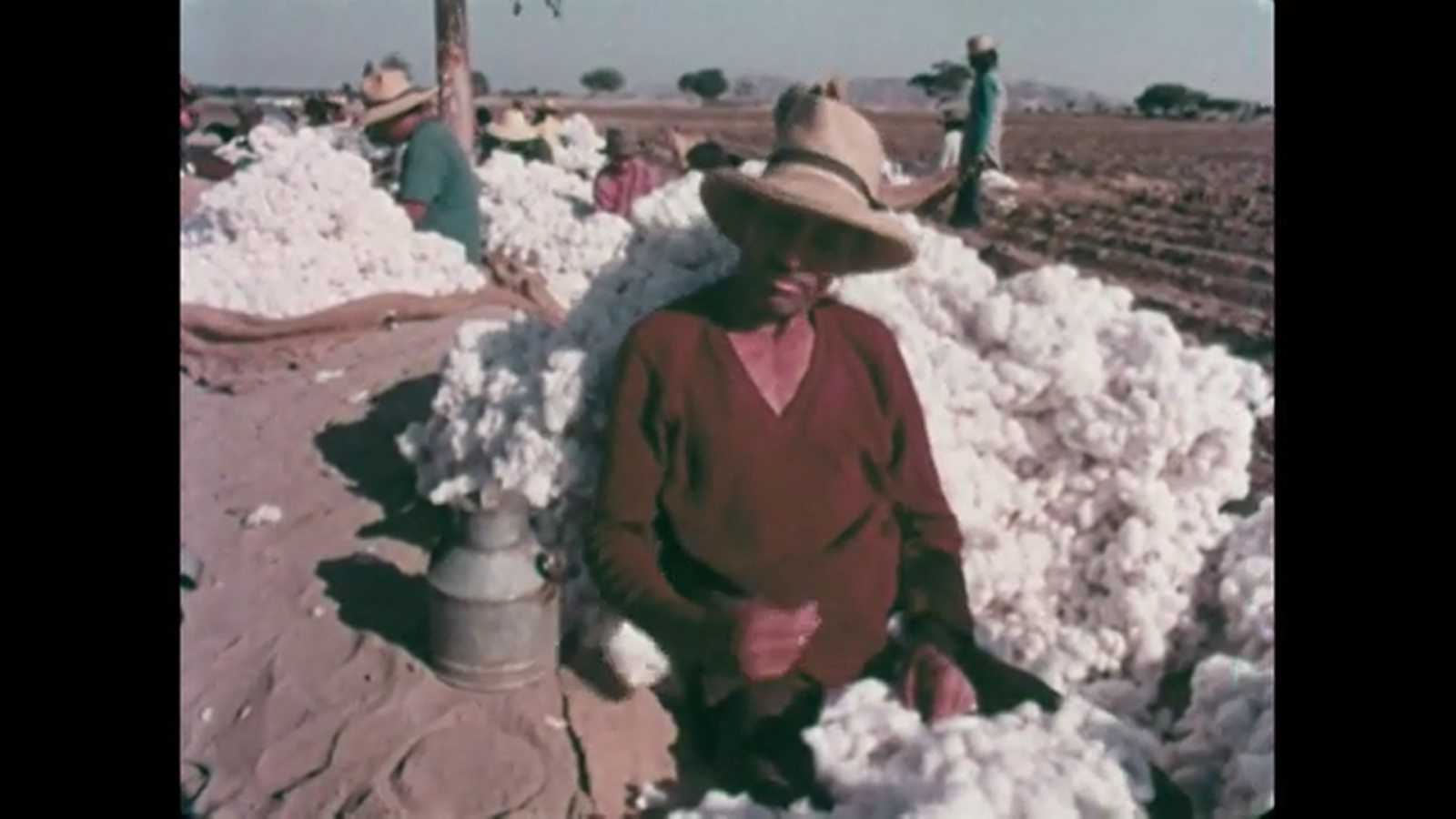
The migrants are paid far less, they have to work much longer to come close to the same rate of pay, and they receive none of the benefits that co-operative members receive. Though the migrants interviewed do say that they aren't driven as hard as before, their pay has gone up and they can now work in groups with friends and family members so the atmosphere has improved.
In short the co-op has improved the members lives, and has achievements it can be proud of, but its still a small part of the capitalist economy. It has to remain profitable to fund its benefits and it has to rely on a two tier system.
However, many of the members are aware of these issues and aren't happy about it. Over the course of the film they're seen to be discussing the problems, especially the disparity between members and migrant workers. The education initiative was part of their attempt to overcome it, and they've started have more frequent meetings and discussion groups.
The film ends with the co-operative hosting a large meeting to discuss issues such as housing and the migrant problem. Some advocate the whole co-op working on building new homes together and expanding the co-op to include the migrants as full members.
It'd be very interesting if the film makers had returned to the co-op a few years later to see how they got on, but the film was released in 1978 and rural Peru was not a very pleasant or safe place in the 80s.
Ultimately though, I think the film demonstrates that co-operative economics can have a strong list of achievements, they're ultimately limited in what they can accomplish on their own, and can't really break free from the capitalist economy.
https://youtu.be/mSgBkbJbzRs
Adult educator Paulo Freire developed literacy programs in northeastern Brazil to combat part of the colonial legacy of illiteracy and promote social change. This film depicts adult educators putting Freire's methods to work on a Peruvian co-operative cotton farm, teaching peasants how to read and write. The promise of the literacy program is that the peasants will be able to use their newly found confidence to change the reality of their daily existence and collectively gain control of their own lives




.jpeg)


