Search This Blog

Showing posts with label Trade Unions. Show all posts

Tuesday, 3 March 2026

Statement by Iran Labour Confederation - Abroad / کنفدراسیون کار ایران - خارج از کشور on the Ongoing War and the Urgency of Revolutionary Action


Statement by Iran Labour Confederation - Abroad / کنفدراسیون کار ایران - خارج از کشور on the Ongoing War and the Urgency of Revolutionary Action

 Statement sourced from here

The killing of Ali Khamenei, alongside a number of senior figures from the IRGC and the ruling apparatus, is an exceptional development in Iran’s current trajectory. It is a decisive blow to the heart of the repression machine and the backbone of the Islamic Republic. For millions in Iran, the death of a man who for decades symbolised massacre, suppression, poverty, militarism, and rule through blood has triggered a moment of release — a mix of long-contained rage and explosive relief.

People’s presence in the streets and the broader social reaction reveal the depth of hatred that years of crime and slaughter have accumulated inside society.

This is not joy in war. It is not joy in bombardment or in the killing of children. It is not joy in foreign intervention. It is the grim relief of seeing cracks appear in a monster that only two months ago, in Dey, drenched the country in blood — gunning down and crushing tens of thousands and turning society into an ocean of grief and anger.

The people who are breathing today are the same people who yesterday were beaten, shot, and thrown into prisons.

Still, we must state the reality plainly: this blow to the top of the state has taken place within a war launched from above and outside the people’s will. A war that threatens lives, turns cities into zones of death, and seeks to paralyse society through fear and ruin.

The United States and Israel have played a direct role through their military attacks, and they must be condemned unconditionally. No “rescue” narrative and no “defensive” framing can launder the killing of civilians.

At the same time, it must be said clearly: the Islamic Republic and the IRGC are not the victims of this war, they are among its principal architects. A state that for years has used society as a shield for its military and nuclear projects is now paying the price for those policies through internal collapse.

Khamenei’s death does not mean the crisis is over, but it does show unmistakably that this system can no longer reproduce its former authority. A structure whose leader has been removed, which is now at war, and which faces a society saturated with anger and hatred has entered a phase of irreversible instability.

We must also be alert to a crucial fact: a rupture at the top does not automatically mean the people’s will is being realised. It is precisely in moments like this that projects designed to contain society become active, “controlled transition,” reshuffling of elites, and the promotion of top-down alternatives meant to hijack the revolution and take the direction of events out of the people’s hands.

Backroom deals, reproducing the same structure with a new face, or imposing client governments under the slogans of “stability” and “transition” are all attempts to neutralise revolutionary momentum and block direct popular power. These scenarios do not represent the end of the Islamic Republic; they represent the continuation of the same repressive order in a new form. The only force capable of blocking this outcome is independent, nationwide, bottom-up organisation.

In a moment like this, the central question is not merely “opposition to war.” The real question is whether society can consciously use the opening created by the rupture at the top to advance revolutionary overthrow. War is meant to frighten society and suspend the revolution; the people’s answer must be to rebuild and organise their social power right in the middle of this crisis.

Workers, wage earners, youth, women, and all social forces must understand one basic truth: no foreign power is going to deliver freedom. The only force that can bring this system down for good is an organised society. Joining existing social organisations, strengthening independent labour organisations, and building councils, local committees, and mutual-aid networks is not a “choice” today — it is an urgent necessity, both to protect human lives under wartime conditions and to take collective control of society’s future.

The Islamic Republic is wounded and unstable. This is not a moment for spectatorship or hesitation; it is a moment for action. The real end of this war will not come through agreements between states, but through the revolutionary overthrow of an order that has turned life itself into a field of death.

We call on people worldwide, labour movements, and freedom-loving forces to stand with the people of Iran — not with states and war machines. Real solidarity means supporting the people’s right to overthrow the Islamic Republic and to build an order that is humane, free, and equal.

The struggle has entered a new stage. Repression has cracked, fear has been shaken, and the possibility of advancing has opened. A society that has paid so much in blood has the right — and the duty — to build its own future.

Iran Labour Confederation – Abroad 


  تحولات ایران است. این اتفاق، ضربه‌ای تعیین‌کننده به قلب ساختار سرکوب و ستون فقرات جمهوری اسلامی است. مرگ کسی که دهه‌ها نماد کشتار، سرکوب، فقر، جنگ‌طلبی و حکومت با خون بود، برای میلیون‌ها نفر در ایران، لحظه‌ای از رهایی، خشمِ فروخورده و شادی انفجاری بوده است. حضور مردم در خیابان‌ها و واکنش‌های اجتماعی، بیانگر عمق نفرتی است که جمهوری اسلامی طی سال‌ها جنایت و کشتار در دل جامعه انباشته کرده است.

این شادی، شادیِ جنگ نیست. شادیِ بمباران و مرگ کودکان نیست. شادیِ دخالت قدرت‌های خارجی نیست. این شادی، شادیِ دیدن ترک برداشتن هیولایی است که همین دو ماه پیش، در دی‌ماه، با گلوله و سرکوب ده‌ها هزار انسان را به خاک و خون کشید و جامعه را به دریایی از داغ و خشم بدل کرد. مردمی که امروز نفس می‌کشند، همان‌هایی هستند که دیروز زیر باتوم، گلوله و زندان له شدند.

با این‌همه، واقعیت را باید بی‌پرده گفت: این ضربه به رأس حکومت، در دل جنگی رخ داده که از بالا و خارج از اراده مردم آغاز شده است. جنگی که جان انسان‌ها را تهدید می‌کند، شهرها را به میدان مرگ می‌کشاند و می‌کوشد جامعه را زیر سایه ترس و ویرانی فلج کند. آمریکا و اسرائیل با حملات نظامی خود در این جنگ نقش مستقیم دارند و باید بی‌قید و شرط محکوم شوند. هیچ روایت «نجات‌بخش» یا «دفاعی» نمی‌تواند کشتار مردم را تطهیر کند.

اما هم‌زمان باید تأکید کرد: جمهوری اسلامی و سپاه پاسداران، نه قربانی این جنگ، بلکه از معماران اصلی آن‌اند. حکومتی که سال‌ها جامعه را سپر پروژه‌های نظامی و هسته‌ای خود کرده، امروز بهای همان سیاست‌ها را با فروپاشی از درون می‌پردازد. مرگ خامنه‌ای به‌معنای پایان بحران نیست، اما به‌روشنی نشان می‌دهد که این حکومت دیگر توان بازتولید اقتدار پیشین را ندارد. ساختاری که رهبرش حذف شده، درگیر جنگ است و با جامعه‌ای سرشار از خشم و نفرت روبه‌روست، وارد مرحله‌ای از بی‌ثباتی برگشت‌ناپذیر شده است.

هم‌زمان باید هوشیار بود که شکاف در رأس قدرت، لزوماً به‌معنای تحقق اراده مردم نیست. درست در چنین لحظاتی است که پروژه‌های مهار جامعه فعال می‌شوند: «گذار کنترل‌شده»، جابه‌جایی مهره‌ها و لانسه‌کردن آلترناتیوهایی از بالا که قرار است انقلاب را مصادره و مسیر تحولات را از دست مردم خارج کنند. توافق‌های پشت‌پرده، بازتولید همان ساختار با چهره‌ای جدید، یا تحمیل دولت‌هایی دست‌نشانده تحت عنوان «ثبات» و «گذار»، همگی تلاش‌هایی برای مهار انقلاب و جلوگیری از اعمال اراده مستقیم مردم‌اند. این سناریوها، نه پایان جمهوری اسلامی، بلکه تداوم همان نظم سرکوبگر در شکلی دیگر است.

تنها نیرویی که می‌تواند این روند را خنثی کند، سازمان‌یابی مستقل، سراسری و از پایین جامعه است.

در چنین لحظه‌ای، مسئله اصلی جامعه فقط «مخالفت با جنگ» نیست. مسئله، استفاده آگاهانه از شکاف ایجادشده برای پیش‌برد سرنگونی انقلابی است. جنگ قرار است جامعه را بترساند و انقلاب را معلق کند؛ پاسخ مردم باید این باشد که درست در دل این بحران، قدرت اجتماعی خود را بازسازی و سازمان دهد.

طبقه کارگر، مزدبگیران، جوانان، زنان و همه نیروهای اجتماعی باید بدانند که هیچ نیروی خارجی قرار نیست آزادی را به ارمغان بیاورد. تنها نیرویی که می‌تواند این حکومت را برای همیشه به زیر بکشد، جامعه‌ای سازمان‌یافته است. پیوستن به تشکل‌های اجتماعی موجود، تقویت تشکل‌های مستقل کارگری، و ایجاد شوراها، کمیته‌های محلی و شبکه‌های همیاری، امروز نه یک انتخاب، بلکه یک ضرورت فوری است؛ هم برای حفاظت از جان انسان‌ها در شرایط جنگی و هم برای به‌دست‌گرفتن سرنوشت جامعه.

جمهوری اسلامی زخمی و متزلزل است. این لحظه، لحظه تماشا و تعلیق نیست، لحظه اقدام است. پایان واقعی جنگ، نه در توافق دولت‌ها، بلکه در سرنگونی انقلابی نظمی رقم می‌خورد که زندگی را به میدان مرگ تبدیل کرده است.

ما از مردم جهان، جنبش‌های کارگری و نیروهای آزادی‌خواه می‌خواهیم که در کنار مردم ایران بایستند؛ نه در کنار دولت‌ها و ماشین‌های جنگی. حمایت واقعی، حمایت از حق مردم برای سرنگونی جمهوری اسلامی و ساختن نظمی انسانی، آزاد و برابر است.

مبارزه وارد مرحله‌ای تازه شده است. سرکوب ترک برداشته، ترس شکسته و امکان پیش‌روی گشوده شده است. جامعه‌ای که این همه خون داده، حق دارد و باید آینده را خودش بسازد.

کنفدراسیون کار ایران – خارج از کشور
۱۰ اسفند ۱۴۰۴
اشتراک بگذار:

Friday, 12 September 2025

LOR Aftermath


 Some more news regarding Lindsey Oil Refinery. Since the beginning of August there have been sporadic protests, the one in the photograph was held at the refinery, you may recognise it from photos of the wildcat strike. There was also a march down the seafront in Cleethorpes and a rally outside parliament. My stepdad attended the refinery protest, he said the turnout was low, but he was impressed with the calibre of the speakers. He didn't recognise any of them, those two facts mean they must've been UNITE bigwigs, none of the local reps are praised for their oratory. 

This hasn't moved the government, who are haemorrhaging support here. Officially, LOR is still open and running, though you'd be hard-pressed to tell. My friend who's an inspector has very little to inspect and has been polishing his CV and looking for other work. My cousin who is a firefighter at the refinery secured a job at the sister refinery Conoco only to be told that since LOR is still technically open they can't take any of the fire and safety staff on as LOR can't source any replacements. Which is very odd since LOR has already downsized and Conoco is next door and the two refineries already collaborate on safety and rescue operations. That's regulations for you! 

I have found out that regarding the full staff (not including contractors) will be made redundant in two waves, the first is rumoured to be in October, the second at the end of the year. I've also been told by several people that they're planning to do it via the two rooms method. Everyone gets called into one of two rooms, and then they find out if they've been let go or not. I hope that's just a rumour because that's brutally cold. 

There's also been an update on that training pledge. There is a commitment from the government to pay for retraining of redundant staff (contractors out of luck again) into new industries, renewables seems to be the one they're aiming for. This has been taken as insult on top of injury. It's not a bad choice all things considered, the renewable sector is a growing part of the local economy, travelling from Immingham to LOR you pass multiple warehouses, many of which are involved in recycling and batteries. Siemens is a big investor in the area as is Myenergy a company that makes batteries for electric cars and chargers. You may recognise Myenergy as it's the official sponsors of Grimsby Town Football Club replacing Young's Seafood, it expanded operations aggressively but had its own round of layoffs last year. 

Grimsby UNITE office, displaying photos from the rallies against LOR closure


While this is feeding into an anti-zero sentiment, the real issue is how's it been handle. Since the refinery is winding down and redundancies are coming, you might think it'd be a good idea to offer the retraining now, perhaps in stages, however it will only be available once you've been made redundant. The training will take months, if not a year, so the workers are faced with a choice to take any work they can find or go without for nearly a year and hope that a job will be available once it's completed. To make matters worse the training contract has not been given to the local industrial training providers it's been given to providers further afield, so transport will be an issue, and it's wasted an opportunity to invest in the local economy. The area has a well-developed apprenticeship and training system with multiple providers, covering engineering, manufacturing, electricians etc. And most importantly they have connections with the industrial employers including the renewables sector.

The response by the government seems tailor-made to piss off and alienate the entire population.  Every step they take or do not take indicates a gross ignorance of the region and a lack of interest. The only thing remotely approaching good news is that the people I know who work for LOR are "safe" relatively speaking. It's also been confirmed that there are buyers interested in the site, though who they are and what specifically they're interested in and willing to keep open and how many jobs they'll secure remain to be seen. A buyer might re-hire some experienced hands, but they may also decide to bring in their own employees. It's difficult to speculate, but LOR in its entirety probably won't disappear completely, but we won't know what will remain. 


Wednesday, 23 July 2025

Notes from the Class Struggle on the Humber


Something unprecedented has happened, my old town has made it to the local news and even bagged the top spot, and without a drop of blood. The town of Immingham was featured on ITV's regional news program Calendar. Unfortunately it's not good news, it's pretty grim in fact.


After serious mismanagement by its owners, the Lindsey Oil Refinery (LOR) is shutting down risking thousands of jobs, and the closure will open a big black hole in the economy of the southern bank of the Humber river. This story is very similar to Scunthorpe's Steel works, which was facing a physical as well as financial collapse and forced the government to step in to keep it open. Scunthorpe is just 20 miles away as the crow flies, these two developments show that the entire region and its heavy industries are in a crisis.

Before the news broke yesterday (22nd of June) I was already made aware of how bad things were going there. I used to work on LORs satellite sites in the neighbouring docklands and have friends and family who work on the refinery in various grades and roles and know many more who have since retired. The refineries cast a big shadow, and I mean that literally as well as figuratively. In addition to being a major source of employment for the towns and villages dotted around them, the chimney stacks can be seen at nearly every part of the town.

 The mood is bleak here, I've been told today (23rd) there will be a march up to the refinery and will try and get details. In the meantime, here are some facts not covered in the ITV Calendar report.

LOR is one of two refineries built in-between the port town of Immingham (Im-Ing-Um) and south Killingholme. It employs around 400 permanent staff but also employs many more as contractors and temporary workers. Shutdowns and periodic maintenance can see the number of workers active on the site balloon into the thousands. It produces various kinds of petroleum, including aviation fuel, which means a knock-on effect beyond the local area is likely.

Already LORs tanker drivers, around 200 people have been made redundant, they were informed of this via Microsoft Teams call. The rest of the staff are in limbo, with discussions ongoing. My friends still working there are updating CVs and looking for other work while they await updates.

The owners of Prax the company that has brought LOR to the point of collapse have gone to Dubai. Funny they have enough money for that. And are generally unresponsive to request for comments or information.

I was working on Immingham docks when Prax took over LOR and I remember there was some disquiet and alarm back then due to the company having no background in refining, several LOR inspectors I knew were convinced the refinery was done at that point, it looks like those fears were correct it just took a little longer to become apparent.

LOR's neighbouring refinery Conoco Phillips (pronounced as Ko-No-Ko by the locals, but is pronounced Kon-O-Ko by the owners) is owned by the US based Phillips 66 and is interested in LORs storage tanks and industrial rail links but produces different grades of fuel so probably will not be interested in the refining systems of LOR. It's doubtful that the entire infrastructure will go, it seems likely that it will be stripped and broken up by other firms, how much will remain and how many jobs will be saved by this asset redistribution remains to be seen.

I was informed that LOR has enough crude to last until the 28th with several vessels standing by in the Humber and the North Sea with fuel oil for LOR that could extend the operational time further, but its up in the air as to if that'll happen.

I have also heard that two other refineries in the UK (out of 6 total) that are looking at a similar winding down but have no details at yet.

You may remember that back in 2009 LOR and Conoco were the epicentre of a wave of wildcat strikes throughout the industry that spread throughout the UK. At the time I was in Hull studying, but my stepdad was involved with the Scaffolders, he's since retired but still hears things from his mates still there. He told me about the planned march and was one of the people interviewed in the Calendar report. Though they cut out most of his commentary on strategic economic interests and big global firms that can asset strip and then relocate.

Based on his and others comments, I don't think a repeat of 09 militancy is likely due to demoralisation of the workforce. Though, despair can turn to anger very quickly, especially if the feelings of abandonment and being ripped off continue. I'll monitor the situation.

24th of July


 UNITE held a protest rally outside Grimsby town hall, I do not know if the planned march on the refinery took place, a friend who works at the refinery was too depressed to meet me on Wednesday (23rd). I believe this protest was replacement or the people telling me about the march were mistaken. If I hear anything definitive, I'll update. I was in Grimsby working that day, not too far away from the protest, but it ended and dispersed before I could clock off.

Bear in mind this is all second hand, but I have attended these types of protests before in the same location with some of the same organisers. This seems to have been a "going through the motions" affair. The speakers were local politicians including the Conservative MP Martin Vickers and Greater Lincolnshire's first Mayor, the Reform party's Andrea Jenkyns (pictured). This worries me as coupled with the demoralisation I have noticed that much of the criticism is aimed at the owners of Prax being foreigners, and the UK selling its strategic assets to large foreign corporations. There is room for Reform and the right wing of the Conservatives to co-opt these sentiments and build up support within economically depressed areas and threatened sections of the labour force. I'm also surprised that the respectable TUC unions are already collaborating with Reform, especially given that the Mayor isn't a relevant official. I was under no illusions that the appeal model of industrial bargaining that the TUC endorses would mean they would attempt to curry favour with far-right officials but I thought it'd take a bit longer.

Personally speaking, the collapse of LOR and Scunthorpe steel works were the result of general economic trends and a culture that weakened regulations and reformed business administration in a manner that gave the owners the freedom to maximise profit in ways that wrecked the overall firms. The image that comes to my mind is a mining company demanding a shaft be sunk so deep that it eventually collapses the entire coal field. The Miners are trapped below the earth, their families are panicking on the surface, and the owners have flown away to a mansion on some tropical island. I don't think the passports of the boss matter nearly as much as the fact that there is a boss and that they are able to stay wealthy and get wealthier out of the impoverishment of others.

Going back to the Tories/Reform/other reactionaries, not only is a deep concern that they seem to be capable of exploiting misery to spread their ideology and build up support, these disasters are the fruits of the economic policies they promote and the Labour government maintains. None of these political factions are offering an alternative solution, they're using this to score points. They are all in favour of capitalism, and they are all in favour of the specific version of capitalism that enables the stripping of assets and embezzlement that can sink nationally important industries. Reform, especially promote and support letting businesses have a free hand in everything. People are pissed off with Labour's reaction to what's happening here, however I do not beleive the situation would be improved by replacing them with the Conservative Party or Reform or any of the others. 

For a couple years the regions of North/North East Lincolnshire and East Yorkshire have seen growing support for nationalisation of industries, infrastructure and utilities. I don't know if its met majority support yet but it is now a common point of view. The situation on LOR has been strengthening that sympathy. I think its an understandable sentiment if you live here, we're part of the British equivalent to Rust Belt in the United States, but I'm old enough to remember that nationalised companies can also experience crisis and collapse, at best its a stop gap measure, one that could (but not guaranteed) prevent the egregious examples of what's happened here and in Scunthorpe but I wish more people round here would dream deeper. 

In other news, the Government has confirmed keeping LOR open for three more weeks to attract a buyer. I haven't seen much detail, but I assume that means some crude vessels were allowed to dock, as a refinery cannot run without oil to refine. Or they could've decided to shut the refinery down in stages. The government has also said it is funding a "comprehensive Training Guarantee", I don't know what that means, and I don't think anyone else does either. This has not brought relief to anyone nor calmed the situation at all. 

Many people are angry with the government's response, or more accurately the lack of response, three weeks isn't much time to conclude a deal nor provide much security for the employees. There have been claims that the government isn't more supportive due to Net Zero commitments. With Tories and Reform especially banging that drum. I don't know Ed Miliband the Energy Secretary, but that doesn't make much sense to me since the Net Zero framework was drawn up by the previous Conservative governments and LOR produces fuel oil for cars and planes, it has a pipeline directly connecting it to Heathrow. 

Electric cars are becoming a common site and I know prototype electric planes exist now, but I don't think the government is planning to switchover to 100% electric automobiles and electric aviation industry by Autumn this year. That seems too ambitious and radical for the current PM's tastes.

I suspect that the actual reason for the government's actions are that they do not want to spend the considerable sum of money taking the refinery over and running. They seem to be set on wishing that a private sector buyer will show up and save the day.  

 31st of July

Well it looks like its all over. Spoke to my cousin whose an LOR firefighter, they've been told they can either work till the closure or leave without notice if other work is available. If they stay until the deadline they'll recieve a bonus but will be competing with everyone else for a few vacancies. And that's just for the full time direct employees who were the cream of the crop in the workforce. Employees at the refinery numbered a little over 400, contractors can swell that figure to over a thousand. They're treatment will depend on the contracting company. The ones I worked for would give you nothing not legally mandated and even then they'd drag their feet on complying.

Still haven't heard any details about this "Training Guarantee" the government have been repeating their appeals to Prax's owners to "do the right thing by their workers" it seems to me if they were the sought to "do the right thing" they wouldn'tve draind the funds, hidden it and then scarpered abroad. We'll see if they face any consequence when the investigation winds down.


Appendix:

This isn't related to LORs troubles but does concern the reporting of it. The Calendar news segment is in my opinion a good case study in how the news media can manipulate a narrative into existence. The core of the reporting reflects what I've been told, but several people I know were upset with how Immingham was portrayed.

During the report it stated that Immingham was already expressing depression and showed two shots, one a very tight focus on an empty shop unit and a boarded up street.

Now Immingham is not a boom town but quite a few people thought this was manipulative, and I agree with them. Regarding the first shot, the town's civic centre does have some unoccupied units but the reason that shot was so tight because the units next to it are occupied which would conflict with the narrative. 

The second shot concerns a street I used to ride my bike down to get to work on the docks. That street is indeed boarded up, but that is because Associated British Ports (ABP), the region's other giant Industrial concern, bought out the houses and businesses on that street as part of a major expansion plan that will take many years to complete. Before the buyout, that street was full of active businesses.

 Of course, this manipulation is practically benign and seems to have been done to reinforce the facts on the ground and not conjure up a narrative. Anyone who lives in the area knows you don't have to work to give Immingham a bad reputation, it's been tarred and feathered for years by the county snobs. I just feel it's important to keep a critical mindset even when presented with a narrative you sympathise with.  


2nd Appendix: 

I've seen some comments echoing the Tory/Reform line about the collapse of LOR being a good thing due to climte change. I think that's both incorrect and extremely superficial thinking. LOR is not shutting down due to competition by Green power sources, its closing due to either gross incompetence or active raiding by its owners. The demand for the petroleum that LOR supplied is still there, and it will move eventually to another supplier. So, either the environmental impact of LOR going will be zero or potentially worse depending on how its market share is divvied up. Its not just production process of fossil fuels that can be environmentally damaging, shipping of refined fuel potentially over great distances will add to the impact, will the other refinery need to expand or cut corners to make up for the increased demand? We saw this in the UK during the Miners strike of 84-5 and the aftermath of the collapse of Britain's domestic Coal industry. Demand for coal remained high during the strike so the government imported large quantities from a number nations including Apartheid South Africa and the Communist dictatorship in Poland.

Importation of vast quantities of coal continued for many years. Immingham docks was one of the main transit points, it was covered in giant black mountains of coal dust up to 2014-16. The biggest ones were doused 24 hours with water by sprinkler systems because they spontaneously combusted all the time. They got rid of imported coal by substituting imported biomass (wood pulp) and the debate over whether that counts as a green alternative rages to this day.

Will the short and medium term disruption brought about by the closing of LOR provoke a backlash against attempts to decrabonise technology and the economy? Reform and the Tories are currently working very hard to see that such a backlash happens. Reform in particular are increasingly sucessful in growing beyond a protest vote, they're sinking roots in new soil and are seeing results in their efforts to radicalise sections of the public. 

This isn't a win for ecosocialism nor is it even a win for green capitalism. Its just an example of capitalism and governance. We won't know the full environmental impact until the dust settles and the reports are published but if there is a slither of good news for the environment here it'll be entirely coincidental.

Thursday, 7 November 2024

1984: Miners Picket of Polish Consulate


SOLIDARNOSC (Solidarity)

PICKET OF POLISH CONSULATE:
(BUCKINGHAM TERRACE; CORNER OF GREAT WESTERN ROAD AND QUEEN MARGARET DRIVE)
(NEAREST UNDERGROUND: HILLHEAD)


END THE STRIKE-BREAKING POLISH COAL EXPORTS!

END THE SUPPRESSION OF FREE TRADE UNIONISM IN POLAND!

WEDNESDAY,  24TH OCTOBER, 5.30PM - 6.30 PM

SPONSORED BY (to date) 

Glasgow Polish Solidarity Committee; Castlemilk Miners Support Committee; Glasgow University Miners Support Committee; Glasgow University (Students) Miners Support Committee; Muirkirk Strike Committee (Ayrshire); Pollock Constituency Labour Party; Cathcart Constituency Labour Party; Stirling Constituency Labour Party; Queen's Park/Crosshill Labour Party; Glasgow University Labour Club; Glasgow District Labour Councillors; Jim Craigen MP; John Maxton MP; Denis Canavan MP; `Critique` Editorial Board; Stuart McLennan (CPSA National Executive Committee); Carol Thomson (Society of Civil and Public Servants, DHSS West of Scotland branch editor); Davey Graham (TGWU branch secretary, Newlands Bus Garage); Rowland Sheret (Chairperson, Stirling Trades Council); Alan Pow (Secretary, Stirling Trades Council); Hamilton CLP.

(All individuals in personal capacity)

At a time when the entire Labour and trade union movement is rallying to the support of the miners, exports of coal from Poland to this country have rocketed and are now running at 316% of their normal level. This is a major boost for the Tories' strike-breaking efforts. 

Solidarnosc, on the other hand, the free trade union banned by the Polish government in the name of `socialism`, has repeatedly expressed its support for the striking miners in its underground radio broadcasts and official statements.

Show your opposition to the Polish strike-breaking coal exports and the continuing oppression of Solidarnosc by supporting this picket. Bring placards and your union/Labour Party banner. 

A statement signed by the above bodies calling on the Polish government to "declare a moratorium on coal exports during the present sufferings of the British miners" will be handed in to the consulate at the picket.


Tuesday, 5 November 2024

FJU Statement Supporting Platforming of Palestinian Journalists


In Support of Platforming Palestinian Journalists


In response to the prevalence of Zionist propaganda regarding the State of Israel’s ongoing genocide in the Gaza Strip, as well as deteriorating economic conditions in the West Bank due to the Israeli occupation’s escalating violence there, the Industrial Workers of the World Freelance Journalists Union calls upon journalists and editors reporting on Palestine to platform Palestinian journalists as sources and to prioritize them for commissions.

At the time of this writing, at least 152 journalists in both Gaza and the West Bank have been killed by Israeli forces since October 2023. Despite the danger, our Palestinian fellow workers risk life and limb every day to show the world the brutality inflicted upon them and their people. Their courage deserves not only our respect and solidarity, but material support.

To that end, the Palestinian Journalists Syndicate (PJS) is willing and able to connect journalists and editors to its English-speaking members. Especially in the last year, the work of Palestinian journalists has been a crucial driver of support for the liberation of Palestine. By offering to make these connections, PJS is providing journalists and editors with a direct line to the people doing that work, as well as a way to ensure that work continues. To be connected with English-speaking PJS members, please contact Shuruq Asad of the union’s general secretariat at: shuruqasad@icloud.com.

Time and time again, we have seen English-speaking news media refuse to acknowledge the State of Israel’s role in murdering our colleagues. Such cowardice has no place in the IWW FJU. We must reject all editorial decisions that fail to frame killing journalists as just that: killing journalists.

As always, the IWW FJU stands in solidarity with our fellow workers in Palestine. Solidarity forever!

Monday, 4 November 2024

FJU Statement on Support for Kurdish Journalists


IWW FJU Condemns Attacks on Journalists Reporting in Iraq


On the 23rd of August 2024, a Turkish targeted drone strike hit a car carrying three journalists in the Seyidsadiq district of Sulaymaniyah. Gulîstan Tara and Hêro Bahadîn, were killed and Rebin Baker was injured. Tara was a reporter and Hêro was a video editor. Both were working for CHATR, a production company based in Kurdistan on assignment for Sterk TV, a Norwegian outlet, at the time they were killed.

Following the attack, various media outlets alleged the reporters were members of the Kurdistan Workers’ Party (PKK) but provided no evidence that they were members at the time of their killing. Meeting with sources who may not be aligned with the interests of the states we call home is an integral part of journalism and in no way warrants the targeting of reporters.

The targeting of women who fearlessly raised their voices to document the truth in a region where misogyny has been widespread is also unacceptable. Targeting journalists represents an attack on the truth, and we join numerous other unions and media organizations in condemning this wanton act of state violence.

This is not the first drone strike on journalists in Kurdistan by the Turkish government. Murad Mirza Ibrahim, an employee with the Kurdish media outlet Cira TV, was also killed in a drone strike a month ago. The Jurdiustan Autonomous Region of Iraq is becoming an increasingly dangerous region for the press, and we stand in solidarity with our fellow workers there demanding safer conditions and an end to targeted strikes.

Attacks on the press are unacceptable, and the pattern of targeted drone strikes on our fellow workers constitutes an attack on all of us and our ability to work safely and report the truth. The IWW FJU stands in solidarity with Hero and Tara’s families in their call for justice, and the people of Kurdistan in their calls for peace and an end to the drone war. An injury to one is an injury to all!

Monday, 19 December 2022

Strike Season


The news has started calling 2022 the year of the strike, which is a good indicator of the decline of industrial action in a country that used to be famous for it. I honestly could not keep up with the number of strike ballots that have passed. The transport unions on the bus and railways across the country have been picketing since the summer, the Royal Mail have started a series of strike days, and the dockers at one of my former workplaces also came out on strike after years of building grievances. 

Now nurses are striking and ambulance drivers are preparing to take action as well. The union branches in my area didn't vote to strike, well they didn't vote at a high enough margin stipulated by the industrial relations legislation, but it is a national health service so it is still having an effect. 

Overall its quite a turn around from the slow decline of industrial action and unionisation that's dominated the UK economy. I'm not surprised we've reached boiling point, I broke my ankle in a road accident in late June. I don't have a bad word to say about the treatment I recieved both the ambulance crew who got me within minutes of being called and the trauma team and the nurse who oversaw my discharge were professional and quick and kind. They were also extremely hardworking, I spent roughly 8-9 hours in A&E before being discharged and hobbling out of there on a pair of cructches a walking boot and a syringe of morphine. During those hours everyone who was present when I went in was still working when I left and they were working. After checking me they went straight to another patient and then another and another before back to me. Once it became clear from my CT scan that there was no neck or back injury they wheeled my bed into different arrangments to make room for others. It never stopped, for everyone patient discharged three or four took their place.

The CT scan was a bit like the lines at the factory I was working at, as soon as one scan was done out you go and in goes the next person, the demand was incredible high, I was extremely lucky that I was second in the queue. My parents were waiting for me in the discharge room, the line was outside the hospital, and they were doing triage in the line to find the most serious cases. When I left at 9pm the line was still stretching outside. The official capacity for the Accident & Emergency ward at my local hospital was 30, on that day they had managed to squeeze in over 60 at its busiest, and that left a lot of people outside or stuck on a chair for hours. 

And this may be a minor point but I include it anyway for completeness sake, I spent 8 hours staring at the ceiling that day. I wasn't allowed to move until the all clear from the scan. Every single ceiling I saw in that building had large holes in it, and when I went back for physiotherapy I noticed that all the floors at bits that had given way and had been patched up, you feel it when your still trying to bend your leg and lift your foot properly.

Both myself and my parents left feeling relieved the injury wasn't worse but extremely dismayed and angry at what we saw. My sympathies are always with fellow working people when struggling against exploitation and the powerful, but I especially support all the health care workers including the social care workers in these struggles. These people are dedicated and are worked relentlessly, meanwhile their service has been strangled and allowed to degrade and stagnate into this present crisis. And they've been doing this for decades. For years Health Ministers have claimed to have increased spending and ring fenced health care and so on. And yet during that time the service has declined, and Doctors, nurses have been vocal about how the government has kept staffing levels and new applications at the same level year after year, and hasn't approved infrastructure expansion or equipment modernisations so procedures take longer and some of the latest treatments simply aren't available. And the influx of private companies and service providers have meant even more bureacracy, and a further decline in the services as cost cuts and profit incentives are introduced. The fees for using the hospital car park are very high, the revenue goes to a private company and not the hospital. When my mother was in hospital for an operation all the beds in the ward had an overhead monitor with a TV built in. No-one was watching them because they charge for them now, they were free when they were introduced. And insult to injury the monitors are owned by another private firm who collects the money. As bad as parking and tv rental fees are that they don't even raise revenue for the improvement of the health service is just spit in the eye.

The government wish to frame the conflict as just another pay dispute with the unions being greedy with the typical argumentative soundbites "not an unlimited pot of money" and "they're already paid more than x" but if they lose this fight the health system will collapse and the public will be in a crisis. My injury wasn't life threatening but it very easily could've been, it could've been a veterbrae that snapped instead of an ankle joint, and even with an ankle fractue without prompt attention and ongoing support I could've damaged the leg permantly and lost the ability to walk. 

I still have to do regular exercise and walk with a cane for support half a year later. There's no way I could afford this under the private model pushed by the government. So I wish to support them and all other striking workers as much as I can. I decided to share some details to show my appreciation. 

Tuesday, 1 March 2022

Komuna deklaracio de la ukrainiaj sindikatoj - Joint Declaration of the Trade Unions of Ukraine


La fonto


De post 2014, Ukrainio rezistas al la agreso de la Federacio de Rusio (FR)

Post tiu agreso, la Ukrainia Krimeo estis aneksita, partoj de la regionoj de Lugansko kaj Donecko en Ukrainio estis okupaciataj. Dum la ok lastaj jaroj da agreso de la FR, Ukrainio perdis dekojn da miloj da homaj vivoj, pli ol 1,5 miliono da niaj civitanoj estis devigataj fariĝi delokitaj personoj interne de la lando.


Samtempe, la milito kaj la minaco je grandskala invado damaĝas la ukrainian ekonomion. Tio estigas perdon de industriaj instalaĵoj kaj infrastrukturoj en la okupaciataj teritorioj, kaj haltigoj de investoj. Ĉio ĉi havas konsekvencojn por la resursoj kaj la vivkondiĉoj de la laboristoj, kiuj luktas por paco kaj demokratia disvolvado de sia lando.


La prezidento de la Federacio de Rusio, V. Putin, per sia dekreto de la 21a de februaro, agnoskis la memproklamitajn respublikojn de Lugansko kaj Donecko, kiel suverenajn kaj sendependajn Ŝtatojn.  


La agnosko de tiuj memproklamitaj respublikoj konsistigas malobservadon de la internacia juro kaj detruadon de la sekureca sistemo, kiu estis starigita post la Dua Mondmilito kaj la disfalo de USSR, kaj malobservadon de la suvereneco, sendependeco kaj teritoria integriĝo de Ukrainio per la efektiva eliro de FR el la akordoj de Minsko.


Krome, la 21an de februaro, la Federacio de Rusio komencis enirigi oficiale rusiajn trupojn en la teritorion okupaciatan de la regionoj de Lugansko kaj Donecko en Ukrainion. (la rusaj dungosoldatoj kaj la profesiaj fortoj, kiuj surhavas identigilojn de la armeaj fortoj de la memproklamitaj respublikoj de Lugansko kaj Donecko jam estis kontraŭleĝe deplojitaj sur la okupaciataj teritorioj).


La ukrainiaj armeaj fortoj respektas strikte la reĝimon pri batalhaltigo. Ili kondukas neniun militan aŭ kontraŭleĝan agon en la okupaciataj teritorioj. Samtempe, sur la teritorio kontrolita de Ukrainio, civiluloj de la regionoj de Donecko kaj Luhansko suferas de semajno senĉesajn artileriajn pafojn devenantajn de la okupaciataj teritorioj.      


Krome, la FR kondukas teruran kampanjon por senkreditigi la ukrainian armeon disvastigante amasajn misinformojn, provokojn, bombadojn sub falsa flago en la regionoj de Lugansko kaj Donecko cele al okazo de milito por komenci grandskalan agreson.  


La oficiala sinteno de Ukrainio, kiu estis plurfoje anoncita, baziĝas sur serĉo de politika kaj diplomatia vojo por la reveno de la okupaciataj teritorioj. 


Nome de la sindikataj organizaĵoj, ni esprimas nian profundan dankemon al la landoj, organizaĵoj, politikuloj kaj personoj, kiuj subtenis Ukrainion dum ĉiuj ĉi jaroj.


Ni petas de la sindikatoj kaj publikaj organizaĵoj, ke ili provizu solidaran subtenon al la ukrainia popolo en sia lukto kontraŭ la agreso de la FR, kaj malhelpu grandskalan militon en Eŭropo, kiu povus tuj ŝanĝi la modelon de disvolviĝo de la eŭropaj landoj kaj la arkitekturo de la tutmonda ordo.   


Ni petas de vi diskonigi la Deklaracion de la Ukrainiaj sindikatoj en la sindikataj retejoj, sociaj retoj kaj tujmesaĝiloj.


La ukrainia popolo rezistos kaj venkos en la lukto por sia sendependeco, sia teritoria integriĝo kaj sia civiliza elekto. 


Subskribintaj sindikatoj : 

  • Laboristoj de la nukleaj industrio kaj energio de Ukrainio
  • Sindikatoj de la laboristoj en metalurgiaj kaj minaj industrioj de Ukrainio
  • Sendependa sindikato de la ministoj de Ukrainio
  • Unuiĝo de la laboristoj en energio kaj elektroteknika industrio de Ukrainio
  • Unuiĝo de la laboristoj en la petrola kaj gasa industrioj de Ukrainio
  • Unuiĝo de la laboristoj en kemia kaj petrokemia industrioj de Ukrainio
  • Sindikato de la laboristoj en la konstruado de aviadiloj kaj maŝinoj de Ukrainio
  • Sindikato de la laboristoj en la defenda industrio de Ukrainio
  • Sindikato de la laboristoj en radio, elektroniko kaj mekaniko de Ukrainio   
  • Sindikato de la laboristoj en aŭtomobilo kaj agrikultura maŝinaro
  • Sindikato de la mekanika konstruado kaj metalurgio de Ukrainio
  • Unuiĝo de la Ŝtataj dungitoj de Ukrainio
  • Unuiĝo de la sanlaboristoj de Ukrainio
  • Sindikato de la municipa ekonomio, loka industrio, servoj al la popolo de Ukrainio
  • Sindikato de la laboristoj en gasaj instalaĵoj de Ukrainio
  • Unuiĝo de la socialaj laboristoj de Ukrainio  

Joint Declaration of the Unions of Ukraine

Ukraine has resisted the aggression of the Russian Federation (RF) since 2014. After this aggression Ukrainian Crimea was annexed, and portions of Donetsk and Luhansk in Ukraine were occupied. During the past eight years of aggression from the RF Ukraine has lost tens of thousands of lives, and over 1,500 million people were displaced within the country. 

At the same time the violence and the threat of full scale invasion has also damaged Ukraine's economy. This has lead to a loss of industrial facilities and infrastructure within the occupied territories, and a halt to investment. All this has consequences for the resources and living conditions of workers, who are struggling for peace and the democratic development of their country.

The President of the Russian Federation V. Putin recognised by decree the self proclaimed republics of Donetsk and Luhansk as sovereign and independent states. 
 The recognition of these self-proclaimed republics constitutes a violation of international law and the destruction of the security system that was established after the Second World War and the collapse of the Soviet Union, and a violation of Ukraine's sovereignty, independence and territorial integration through the effective exit of the RF from the Minsk Accords.

In addition, on the 21st of February the Russian federation began to officially deploy troops into the territory occupied by the regimes in Donetsk and Luhansk. (Russian mercenaries and professional forces wearing the uniforms of the armed troops belonging to the self-proclaimed republics of Luhansk and Donetsk were already deployed illegally in the occupied territories.)

Ukrainian military forces strictly adhere to the ceasefire regime. They conducted no warfare or illegal action within the occupied territories. At the same time, civilians from the Donetsk and Luhansk region have been suffering incessant artillery fire from the occupied territories for weeks. 

In addition, the RF is waging a terrible campaign to discredit the Ukrainian army by spreading false misinformation, provocations, false bombings etc, in the Luhansk and Donetsk regions to provoke war like conditions, to start a large-scale aggression.

Ukraine's official position, which has been repeatedly announced, is based on a search for a political and diplomatic path for the return of the occupied territories.

In the name of the trade unions, we express our deepest gratitude to the countries, organisations, politicians and people who have supported Ukraine during these years.

We call on trade unions and public organisations to provide support to the Ukrainian people in their fight against RF aggression, and to prevent a large-scale war in Europe that could immediately change the development of European countries and the foundations of the global order.

We ask you to disseminate the Declaration of the Ukrainian trade unions on the trade union websites, social networks and instant messengers.

The Ukrainian people will resist and triumph in its struggle for its independence, its territorial integrity and its choice of civilisation.


Union Signatories:
  • Workers of the nuclear industry and energy of Ukraine
  • Trade unions in the metallurgical and mining industries of Ukraine
  • Independent trade union of the miners of the Ukraine
  • Union of Workers in the Energy and Electrical Industry of Ukraine
  • Workers' Union in Ukraine's oil and gas industries
  • Union of Workers in the Chemical and Petrochemical Industries of Ukraine
  • Workers' Union in the construction of aircraft and machinery of Ukraine
  • Trade union workers in the defense industry of Ukraine
  • Union of Radio, Electronics and Mechanical Workers of Ukraine
  • Workers' Union in Automobile and Agricultural Machinery
  • Union of Mechanical Engineering and Metallurgy of Ukraine
  • Union of State Employees of Ukraine
  • Union of Health Workers of Ukraine
  • Union of the municipal economy, local industry, services to the people of Ukraine
  • Trade Union of Gas Plant Workers of Ukraine
  • Union of Social Workers of Ukraine

Friday, 5 June 2020

On Police Unions

The ongoing events in the United States have thrown a spotlight on a very bizarre feature of the labour movement in that country. The AFL-CIO the largest trade union confederation operating in the country includes affiliates from the police unions.

This fact, and the AFL-CIO's tepid press releases about opposing racism and police violence, while doing nothing productive to oppose racism or police violence has understandably enraged many.  The AFL-CIO leadership is now under increased pressure to at the very least sever formal ties with police unions. The tensions have escalated to the point that the AFL-CIO headquarters was ransacked and set on fire.


I'm not surprised, I have no love for the AFL-CIO as an organisation, but their stubborness on this issue never mind their decision to allow affiliation with police unions in the first place shows just how useless and clueless its top officials are if we give them the benefit of the doubt and take them at their word they do in fact want to build a powerful labour movement that changes the USA for the better.

Police unions are a powerful entity to lobby and increase the power of the police, and it is the police who are in the vast majority of cases the main opposition to the labour movement. Like racist murders, corruption and protection from consequences for shocking acts of violence this relationship is not remotely unique to the United States. The reason the US finds itself the centre of discussion and on the frontlines of the tensions so often is because its just more overt and blunt about it.

Even in my community we have ample examples of the police being structured by design to be the enemy of the labour movement. After the 2010 elections and the coalition between the Tories and the Libdems was formed, they immediately carried out sweeping austerity policies, this wasn't a surprise, the Tories had been moaning about over spending since 1997, and the global financial crisis gave them ample justifications. What was surprising was that the police were part of the cuts and cost saving packages, usually they were ring fenced, but this time they faced spending freezes, recruitment cuts and privatisation of some of their functions to cheaper options.

This genuinely alarmed the leadership of the police and they took action. They turned to their friends in the press and television media and appealed to the British public warning them about the dangers of reduced numbers of officers, and having to do much more with less, they won't be able to patrol the community etc. The other thing they did was use the Police Federation, (the equivalent of a union that performs many of the same functions, but with greater restrictions) to build links with the TUC. So you had this strange phenomena of police officers marching in anti-austerity demonstrations.

I remember taking part in a demonstration in my town to support one of public sector "general strikes" which was a symbolic one day strike mainly carried out by Unison and UNITE and the FBU, with support from the local Labour party and the Socialist Party of England and Wales/TUSC. When I got there I saw at the back two officers holding a banner from the Police Federation. I decided to keep my distance and moved as far as possible from them. I made small talk with some people I recognised while waiting for the speeches to start.

I got talking to a couple of Labour councillors I knew, and one of them made comments about how disgusting it was that the police were here and taking part as equals. This surprised me greatly, not just because he was a Labour councillor, but he was also the kindest man I've ever met, I had never heard him say a bad thing about anyone before. He then pointed something out to me that I had completely missed, around the corner parked just out of view from the main street but so it could see us clearly was a police riot van full of about 6-8 coppers with their helmets and riot gear on ready to go if things should kick off.

Even when they were officially part of the opposition the police did not relax from its mandate to police and control and should it prove necessary bludgeon its "allies". Of course nothing happened, it was a purely token show of force by a local Trades Council and even the speeches were mild, and we all drifted off. But it still a threat of potential violence.

He then told me how he never would trust or forgive a policeman, and I should do the same. The cause of his unconcealed loathing was the Miners strike of 84/85. There weren't many pits in Lincolnshire at the time but Yorkshire isn't far away, so when the police started to lock counties down they also did the same to us. At the time he was active in Miner's solidarity, and would take food parcels into Yorkshire pit towns, that is when the police let them. Often what they did was pull the cars over line everyone up by the roadside, threaten them, slap some of them around and throw all the supplies in a ditch, usually while laughing and cracking jokes.

This was not the only example of police power in my area during that time. In an attempt to break the strike the government imported vast quantities of coal, a lot of which came from Apartheid South Africa and the military dictatorship of Poland.


A lot of that coal, and iron needed for keeping the steelworks going came through the ports on the east coast and the Humber. The TGWU leadership did nothing, but a lot of the dockworkers in my area decided to take matters into their own hands and either refused to offload shipments, or agreed to do so and then "blacked" [ruined] them. Things really kicked off when in an attempt to get around militant dockers, non unionised workers were brought in as form of scab labour, this forced the TGWU to call a national strike after the local dockworkers had forced its hand.

The government response was to tighten the repression and send police into the ports to break up pickets and guard trucks (the local freight train engineers also refused to transport suspected materials that would be used to break the Miners strike) .

Apparently this alarmed the government so much that they were planning on deploying troops to break the strike, but the TGWU let the strike breakdown by July, so the government relaxed.

Margaret Thatcher was so scared of losing her battle with striking miners she secretly plotted to send in 4,500 troops to crush them, ­official records reveal today.

The former PM came closer than ever thought to military action amid fears the ­increasingly bitter industrial action could destroy her Tory government.

Thatcher considered declaring a state of emergency to bring in the brutal ­measures after dockers also walked out.

Hundreds of miners and their supporters had already been injured during fierce clashes with riot police at picket lines in some of the worst industrial violence Britain had ever witnessed.

But declassified National Archive papers show Thatcher was also prepared to use the Army as a tool of the state to break the strike as part of her dogged campaign against the National Union of Mineworkers.

The Government had been locked in a long war of attrition with NUM chief Arthur Scargill when a dispute at Immingham docks on the Humber blew up into a national strike in 1984.
 https://www.mirror.co.uk/news/uk-news/miners-strike-margaret-thatcher-prepared-2981964

Of course this is worlds away from the US of the AFL-CIO leadership, perhaps they've just never experienced this side of policing? Well, no they have done, the current President of the AFL-CIO is Richard Trumka. He obtained that position based on his work as President of the United Mineworkers of America (UMWA). During his presidency the UMWA fought a nine month battle at the Pittston Coal mine 1989-90. The police were very active, over 4,000 arrests were made of picketers and the strike became well known for its violent confrontation. And that's just one example, the history of miners in the US is possibly the bloodiest in labour history. So, no if anything Trumka at least knows full well what the police do and how meaningless it is to have them affiliated. And the AFL-CIO is persisting in providing this very hostile force access to tools and support for it to make it self even more powerful and hostile.

At a bare minimum police and prison officer unions should be disaffiliated and left to stand or fall on their own.


Wednesday, 26 February 2020

1972: Dockworkers Strike


1972 was a big year for strikes and labour unrest in the UK. Famously the Miners strike of 1972, seen as a opening fight in the big conflict between the Miners and the government in 1974, which lead to the defeat of Ted Heath. But there was also a serious builders strike which involved a young Ricky Tomlinson who was one of the Shrewsbury 2, arrested for picketing. Residents of Kirkby held a massive rent strike in the same year.

And there was a nation wide strike of dockers. The strike was motivated by growing government interference in labour disputes with its new legislation on union activities, planned redundancies after the container revolution and other technological improvements meant employers felt confident they could pay fewer people to do more work, and the growing monopolisation of the shipping industry.

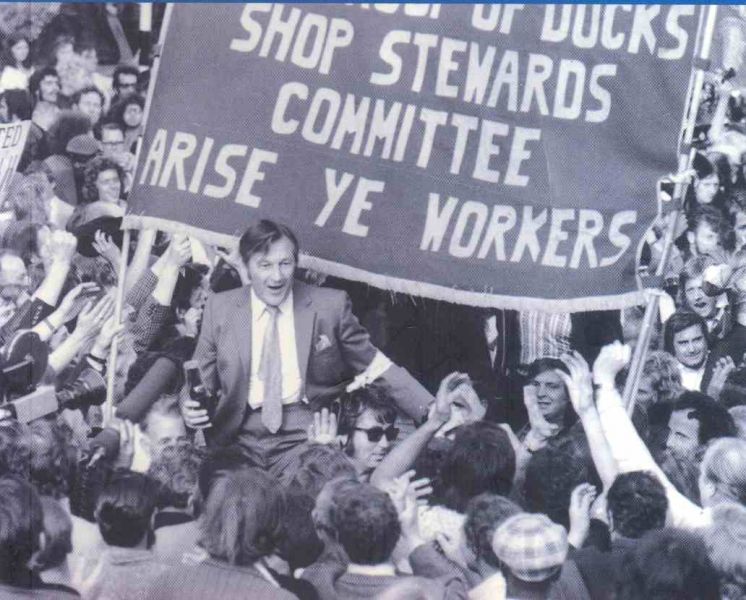
Cinema Action made a short documentary on the picket lines of the strike and its very interesting. Trade Unions in Britain have a reputation of being extremely conservative and sluggish, so it was surprising to see a strike organised mostly by the shop stewards that pushed the bureaucracy much further than they wanted to go. And we hear many striking dockers denounce capitalism, how capitalism uses technological progress purely to increase profits instead of as means to improve conditions and lives of everyone.

And several dockers outline how the attitudes of both Labour and Conservative governments to the industry and the dock workers isn't particularly different. Labour governments have also a pretty dark track record of handling disputes in that industry.

"We've got this tremendous struggle by the employing class, for the survival of their profits. And that means they're going to intensify the struggle against the working class in order to maintain their profits. Anybody that advocates going along with the law as a kind of a tactic and wait for a general election so that the next government can repeal it, is just ignoring history.

Because the law we've got today is just a reflection of all the governments we've ever had in the past, every government that we've ever had in Britain has been a government that has tried to anchor off the working class in one way or the other. It happens to be a Tory government this time, the last one was a Labour government who laid the blue print for it.

And unless we can return to the masses, to the workshop floor, that the workers themselves who are working there every day of the week, clocking on, clocking off. Getting a pittance for the work that they do for the employers. Unless we can get that in our own head, that we can fight this battle and win. Then we'll lose."


Link https://youtu.be/qQGnKf58fkg

Popular Posts