Search This Blog

Showing posts with label Latin America. Show all posts

Monday, 4 November 2019

Guatemala - Democracy Under the Gun


During the cold war Guatemala was ripped apart by a fierce and long lasting civil war. The hyperexploitation of the land and working poor of the country including its large Indigenous Mayan population led to increased resistance which was met with vicious repression by the police and military.

This eventually led to a civil war as the now desperate population took to countryside and turned to armed resistance for defence. During the civil war despite the support of the international right wing including the American and British governments, accounts of the atrocities, mass murder, torture, sexual assault, mutilation of the dead, destruction of entire villages got out.

The resistance wasn't broken either, if anything it grew, so they were left with an increasingly unstable countryside and also growing international isolation. In 1986 the Guatemalan government tried to improve its image by having the generals step back and allow more participation from civilian politicians. Though civilian politicians fully on board with the military and the civil war. Essentially they attempted to pretend they have become a functioning democratic state and thus repaint the war as a defence against political extremists, instead of ethnic cleansing campaigns.

It didn't work, but a documentary film crew took advantage of the slightly more tolerant climate to make a film documenting how the regime operates and conducts its war.


Link https://youtu.be/r438T_tVcEo


Publication date 1987
Camera, Burleigh Wartes ; editor, Marcello Navarro F. ; music, Leslie Steinweiss
Examines the challenges facing the civilian government which came to power in Guatemala in 1986, especially in the areas of human rights, land tenure, and military control

Thursday, 9 May 2019

Peru: Literacy for Social Change


A couple of common themes in leftish discussion is a seemingly never ending argument about workers Co-operatives, and the problem of education. How do we educate "the masses" how can we escape the problems of liberal academia and so on. I've recently stumbled upon a short documentary that concerns both and intertwined them.

There are some advocates of alternative means of education, a very popular and highly influential advocate was Paulo Freire. Freire's Pedagogy of the Oppressed is an effort to link education with political and social liberation. A key example of this is the issue of adult illiteracy and how to solve it. He and many educators inspired by his methods found that by making a custom study plan based on the lives and the challenges and obstacles of the students was a very effective way to teach reading and writing, and at the same time stimulate awareness of their issues and help them develop ways to organise and improve on them.

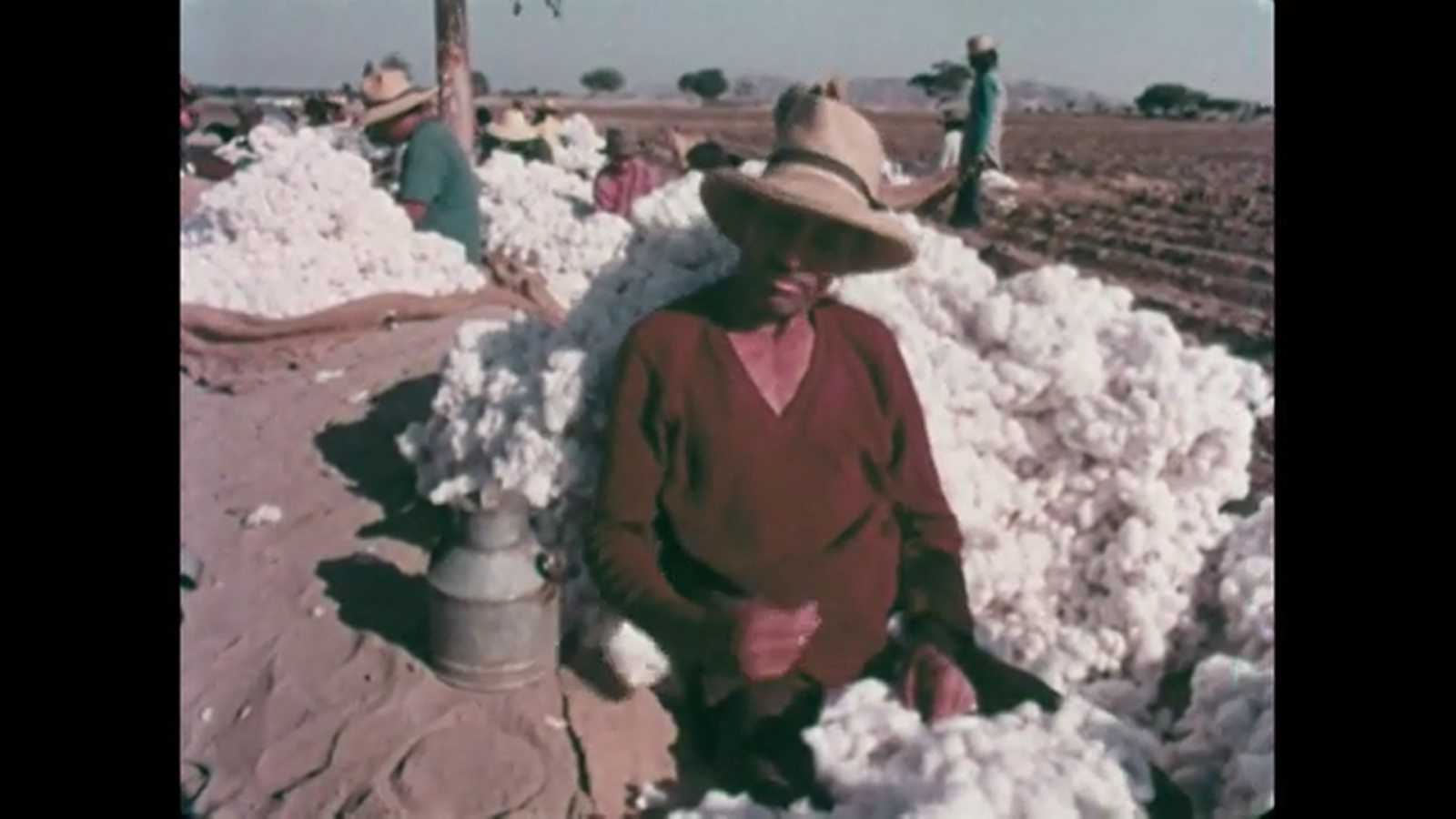
The documentary Peru: Literacy for Social Change, features a group of educators using Freire's methods on a Co-operative farm in rural Peru in the 1970s. While there the cameras document life on the farm, the effects of the land reform that established the co-operative, how things changed, what hasn't changed, what issues they face and what steps the members are taking to address them.

On the co-operative side its an interesting case study, they initially lived on the land owned by a large land owner, and paid their rent through their labour, if they had any issues or needs they had to rely on the "Don" to provide, if he felt like. But after a land reform law was passed the owner left and the labourers became members of a co-operative that shared the land and the work.

They have a number of accomplishments, the most brutal working practices under the old landowner no longer happen. They can work in groups and use the co-ops tools, and women in the fields no longer have to strap their babies to their backs while working. they get holidays, a short fall no longer means no payment. The co-op remains profitable, the work is not as heavy as before, they've expanded housing, run a canteen, a social security system and have sent some of their members away to be trained as educators, and they've now returned to teach the rest of the co-operative how to read and write.

Nevertheless challenges remain, they're still tied to the wider economy, they aren't profitable enough to meet all their needs, some housing has been built but overcrowding is still a problem, the division of labour isn't exactly egalitarian with women having to juggle or combine work in the fields with raising and teaching the children because the co-op hasn't been able to open a nursery like it's been promising. The head of the co-op complains that many members treat like the old landlord (they even still call him Don) and put most of the responsibility for running the co-op on him alone. And perhaps most importantly, the farm still relies on large numbers of migrant labourers during harvest time.


The migrants are paid far less, they have to work much longer to come close to the same rate of pay, and they receive none of the benefits that co-operative members receive. Though the migrants interviewed do say that they aren't driven as hard as before, their pay has gone up and they can now work in groups with friends and family members so the atmosphere has improved.

 In short the co-op has improved the members lives, and has achievements it can be proud of, but its still a small part of the capitalist economy. It has to remain profitable to fund its benefits and it has to rely on a two tier system.

However, many of the members are aware of these issues and aren't happy about it. Over the course of the film they're seen to be discussing the problems, especially the disparity between members and migrant workers. The education initiative was part of their attempt to overcome it, and they've started have more frequent meetings and discussion groups.

The film ends with the co-operative hosting a large meeting to discuss issues such as housing and the migrant problem. Some advocate the whole co-op working on building new homes together and expanding the co-op to include the migrants as full members.

It'd be very interesting if the film makers had returned to the co-op a few years later to see how they got on, but the film was released in 1978 and rural Peru was not a very pleasant or safe place in the 80s.

Ultimately though, I think the film demonstrates that co-operative economics can have a strong list of achievements, they're ultimately limited in what they can accomplish on their own, and can't really break free from the capitalist economy.


https://youtu.be/mSgBkbJbzRs
Adult educator Paulo Freire developed literacy programs in northeastern Brazil to combat part of the colonial legacy of illiteracy and promote social change. This film depicts adult educators putting Freire's methods to work on a Peruvian co-operative cotton farm, teaching peasants how to read and write. The promise of the literacy program is that the peasants will be able to use their newly found confidence to change the reality of their daily existence and collectively gain control of their own lives


Sunday, 10 February 2019

El Salvador Another Vietnam?


I've discovered a documentary made about 1979-1981 covering the escalating civil war in El Salvador and the growing involvement of the United States military and intelligence services. It covers the Salvadoran economy and society, its poverty, the dominance of a few families, the limited reforms carried out by earlier shaky Junta's etc.

Its an excellent introduction into this period, but because of the nature of the subject it makes for some very grim viewing.

The footage the makers have managed to acquire is extremely shocking and disturbing. The films content includes description of death, torture, mutilation, but they also obtained quite extensive footage of these horrible acts. So I've decided to age restrict the video and put the links at the bottom so you'll have to read this warning first.

Here's just a brief description of some of the more distressing scenes, a number of military police stand over a corpse, one of them takes a rifle and then plants it in the hands of the deceased protestor. Footage of the military raid in June 1980 on the National University, including soldiers firing on two un armed students who are lying down on the floor reciting prayers. One of the students is hit several times and we see him begging for mercy. Several of the interviewees of the documentary including a missionary and members of the Democratic Revolutionary Front were abducted, tortured and murdered before filming finished and the makers included their discovered bodies.

There are also segments dedicated to rebels ambushing soldiers and street battles. Its honestly very haunting, but the makers of the film did an excellent job. Spokespeople for the government have their speeches downplaying violence juxtaposed with shocking brutality. It contains many testimonies from politicians, Christians, rebels, and students.


Video Link https://youtu.be/xh5nobEMuH0

Publication date 1981
This film examines the civil war in El Salvador in light of the Reagan administration's decision to "draw the line" against "Communist interference" in Central America. It offers an overview of U.S. military and economic policy in Central America since 1948, with extensive background to the current crisis. Includes scenes with both government and guerilla forces, and discusses U.S. aid to the Junta. Is this the beginning of a "new Vietnam"? A Blue Ribbon Winner, American Film Festival 1982. Directed by Glen Silber and Tete Vasconellos. 1981
Producers, directors, Glen Silber, Tete Vasconcellos ; editor, Deborah Shaffer ; narration, Claudia Vianello ; narrator, Mike Farrell

Friday, 10 November 2017

The CIA's First Coup in Latin America - Guatemala 1954


The CIA is notorious for its operations in Latin America. Its hard to argue that any other organisation has done more to attack and restrict democracy around the world. Their operations to topple the Presidency of Arbenz in Guatemala in 1954 was the first of many operations carried out that lead to the deaths of hundreds of thousands of Latin Americans, and even managed to get several US citizens killed too.


Link: https://youtu.be/YCWmU9fNzpM

 The ideological justification for the death squads and mercenaries that terrorised the continent was of course the claim that Communism would take control of the region. Of course this wasn't true, Communists of various ideologies were always in the minority even in Cuba the rebels who overthrew Batista were a coalition of very different political groups, if anything US hostility to the new regime gave the small Communist faction the opportunity to grow and become dominant.

Many of the governments targeted for coups and destabilisation were punished solely for wanting to carry out limited social and economic reforms. Some of the governments weren't even left wing but moderate right wing Christian Democratic administrations. Arbenz was not a communist, his crime was cutting into the profits of United Fruit and pursuing an independent policy. The wars fought in Latin America in the 20th century were always about protecting profits and influence.


Transcript

Program Producer Max Pierson:

We’re going to begin in Guatemala and the coup that signalled that Uncle Sam was determined to play tough in the face of any perceived threat from Leftist governments in America’s backyard. The period between 1944 and 1954 was known in Guatemala as the ten years of spring. Free elections had been held and resulted in a left-leaning government under President Jacobo Arbenz, which had introduced reforms designed to share the country’s wealth more evenly.

Some in Washington saw that as a “Red threat” creeping communism. So in 1954 the Central Intelligence Agency (CIA) engineered a change in government in Guatemala, it was the first CIA backed coup in Latin America. Michael Lanchin has been speaking to the son of Jacobo Arbenz who was forced to flee into exile along with his father.

[Archival Radio Announcer with an English accent]

Carrying anti-communist banners jubilant soldiers celebrate victory following their two-week revolt in Guatemala. Colonel Carlos Armas the rebel leader is embraced by some of his supporters who helped him overthrow the Red regime in Guatemala.

Michael Lanchin:

It’s the summer of 1954 and the victorious coup leaders are gathering in Guatemala City after their successful overthrow of the country’s leftist President. A group of Guatemalan army officers, trained and financed by the CIA are now in power.

[Another Archival Radio Announcer with an English accent]

Arriving from Guatemala City is Colonel Elfego Monzón, head of the temporary Junta. He has high hopes of becoming President of Guatemala, but so has Colonel Armas. Then when the few Red outlaws who still menace the city have been quelled, free elections will again be held in Guatemala.

Michael Lanchin:

It’s the end of ten years of civilian rule in the Central American country. And President Jocobo Arbenz and his family are forced to flee.

Juan Jocobo:

When we went into exile, he was extremely bitter about what had happened. For the betrayal he suffered, his struggle was for the good of the people of Guatemala. He had great ideals, he was left feeling very, very bitter.

Michael Lanchin:

Juan Jocobo was the only son of President Arbenz, he was just five years old when his father was elected in 1950.

Juan Jocobo:

It was quite hard for me as a child because both my parents were involved in politics from when I was born. So, I rarely saw them, I didn’t really understand why until later on. We lived in a large estate which my father had bought with his own money. I remember that it had a huge garden, I had a nanny, and a bodyguard who also became my tutor. When I was three or four, I didn’t go to kindergarten, because I later found out there had been some kidnapping threats. For my own security I grew up pretty much alone at home because my older sisters all went to school, it was a difficult childhood.

[Music]

Michael Lanchin:

Guatemala had a largely feudal system since colonial times where the majority indigenous Mayan population lived in poverty, while wealthy landowners took charge of governing with the support of the United States. But in the mid 1940’s the US-backed Dictator was overthrown in a popular revolt. And the country’s first free elections were held.

Jacobo Arbenz a progressive former army Colonel became Guatemala’s second democratically elected leader. Once in office Arbenz pushed ahead with a reformist agenda; at the forefront were radical land reforms granting peasants access to vast swathes of arable land. The move infuriated Guatemala’s largest foreign investor, the United Fruit’s company one of America’s most powerful corporations. And it set alarm bells ringing in Washington where President Dwight Eisenhower had pledged a worldwide fight against the spread of Communism.

In August of 1953 President Eisenhower gave his approval for an operation codenamed PBSuccess, authorising the Central Intelligence Agency the CIA to begin organising and arming an opposition to President Arbenz.

Juan Jacobo:

I first realised that the situation was serious when they told us we had to leave Casa Presidencial the Presidential Palace because of the threat of bombing from aircraft. I remember being told “get your stuff ready, the toys you want to take with you”. We went to a house in Zone 10 of the city, it had a big garden, at times we had to hide under the beds. It was an anxious time.

Michael Lanchin:

The first group of anti-government rebels -former Guatemalan soldiers- had crossed the border from CIA bases in neighbouring Nicaragua and Honduras in mid-June of 1954. Newsreel from that time cast them as plucky freedom fighters.

[Another Archival Radio Announcer with an American accent]

Guatemalan insurgents stand guard at a Honduras airstrip while newspapermen press near a lone plane seeking passage over the rocky wooded hills to the border town of Esquipulas, capital of the Free Guatemalan Government.

Michael Lanchin:

The Guatemalan army though still loyal to President Arbenz feared that an all-out American invasion would soon follow. By late June the Guatemalan top brass had lost their nerve and senior officers urged President Arbenz to go.

On the night of June 27th 1954 an emotional and exhausted President Arbenz announced his decision in a radio message.

[Extract from Arbenz Radio Speech Announcing his Resignation]

Our enemies have used the pretext that we are communists, though the reality is very different.

Michael Lanchin:

The next day the deposed President, his family and dozens of his closest associates took refuge in the Mexican Embassy in Guatemala City.

Juan Jocobo:

People were sleeping in the corridors, in the stairways, both floors of the embassy were full of people. I remember us having to go to the rooftop to play, my parents didn’t like us going up there because there weren’t any railings. Sometimes when we went to look out of the windows – which we weren’t allowed to- I remember seeing demonstrations out on the streets, people with banners against Arbenz.

Michael Lanchin:

So, you were with your parents inside the Embassy for about three months, did you see much of your father during that time?

Juan Jocobo:

I saw very little of him, he was always locked away, smoking, drinking coffee and in meetings with all his associates who were hiding in the Embassy with us.

[Music]

Michael Lanchin:

The family were eventually granted safe passage out of the country. First to Mexico then to France, Switzerland, Czechoslovakia and then to the Soviet Union where Juan Jocobo still not even ten years old was sent to a boarding school.

Juan Jocobo:

One of the things that really affected me was that it got to a point where I didn’t really understand what was happening. I didn’t want to ask my parents, they looked so anxious. It was starting to affect my schooling, to the point that my mother had to teach me to read and write in Spanish. After that I began learning Czech, then I had to start learning Russian, at boarding school in Russia I used to look out of the windows when it snowed.

Everybody else spoke Russian, nobody spoke Spanish, I felt isolated and lonely, cut off from my family and my country.

Michael Lanchin:

In 1956 the family moved to the relative stability of Uruguay. Later they went to live in Cuba on the invitation of Fidel Castro. Juan Jocobo says that his father never really recovered his spirits and he died a broken man in Mexico in 1971 aged just 57. But there is one more tragic detail to this story which Juan Jocobo only mentioned at the very end of our conversation.

Juan Jocobo:

The pressures from being in exile was so great that my eldest sister killed herself when she was just 25. My other sister killed herself in 2004, it was all terribly difficult for the family. We’d been separated from all our childhood friends, our relatives, because of the circumstances of our situation. We lost everything that you normally have growing up, stability, school, family around you.

When I look back now and try to make some sense of it, all that we’ve suffered I’ve often thought about it in quiet moments and wondered why, why, why?

Michael Lanchin:

Juan Jocobo Arbenz later returned to his native Guatemala and in 2003 he ran unsuccessfully for the Presidency. He’s now 69 and he lives in Costa Rica.

Max Pierson:

Michael Lanchin was speaking to Juan Jocobo Arbenz whose life and the lives of so many others was turned upside down by that CIA backed coup in Guatemala in 1954.

Tuesday, 28 March 2017

Words Can Cut Deep: Speech and Violence


For the past few months the internet has been a buzz with fights and arguments over the concept of Free Speech. Its been quite varied and heated. Recently Libcom.org was the site of a textual slapfight with another blog, and while I don’t really think the position offered is useful or even consistent it did get me thinking.
The blogs stated there is a difference between speech and acts, the example given was that it is justified and correct correct to fight say the British Union Fascists (BUF) because they represented a paramilitary threat (debatable) rather than just an ideological one. This isn’t a unique distinction liberals who favour maximum speech rights for all do often give a concession to physical defence against unambiguous violence. But the problem is that speech in itself can and often is a form of violence as well.

This happens in a number of ways but one of the most common is the tactic of outing someone. Outing is most commonly associated with queer individuals and Milo Yiannopoulos himself a recent lightning rod for this argument outed a Trans student at a University in Milwaukee, and is believed to have planned on doing the same to undocumented students on the campus of the University of Berkley.


"I didn't know if I was going to get attacked or not. I was just like, 'Dear god, I hope nobody recognizes me.'"

"When you have a room full of people that are just laughing at you as if you're some freak of nature, like you have some kind of mental illness—which is how he described me—it's like, I don't even know how to describe it, but it was way too much,"

Now in this particular case the harassment remained verbal, but it could very easily have had a darker ending, in 2015 21 people were murdered for being transgender in the United States.[1]

In March of this year there have been seven recorded murders of Transgender individuals recorded in the United States.[2]

There’s also been an increase in hate crimes recorded with Transgender people being disproportionately targeted.

 
“In its 2014 report, the FBI recognized 1,248 victims of hate crimes targeted due to their sexual orientation (18.6 percent of all hate crimes reported) and 109 victims of hate crimes targeted due to their gender identity (1.8 percent of all hate crimes reported). The National Coalition of Anti-Violence Programs (NCAVP) reported that 2015 saw a 20% increase in the number of hate violence-related homicides of LGBTQ and HIV-affected people - noting that people of color and transgender people are disproportionally targeted. NCAVP reported that 62% of all LGBTQ homicide victims were people of color, and 54% of homicide victims were transgender women of color.”[3]


But this isn’t a situation unique to LGBTQ people, on the contrary it’s a fairly common tactic that can be used against any group and often is.

In El Salvador Roberto D'Aubuisson (pictured) the leader of the extreme right wing ARENA party used to give televised speeches exposing people he claimed to be communist terrorists. In addition to naming them would show photographs of them so they could be recognized. Once outed if they didn’t escape (either abroad or to the underground) they would disappear. Their bodies would usually be found some days later showing signs of torture and mutilation.

“Having established the principle, D'Aubuisson got down to specifics, marshaling charts, photos, videotapes, and computer graphics for an intricately detailed, name-by-name, face-by-face tirade against "El Salvador's terrorist conspiracy."

D'Aubuisson denounced union leaders, priests, academics, peasant organizers, students, professionals, government officials, and Christian Democrats. Among those he named was Archbishop Oscar Romero, whom he told, "You still have time to change your ways." He also attacked Mario Zamora, a leading Christian Democrat and member of the government who—like others identified in the broadcasts—was assassinated in a matter of weeks. “[4]

Now obviously the Salvadoran civil war is an extreme case but it does demonstrate how speech can be used as a systemic tool of terror. And the only thing that makes it extreme is the circumstances, denouncing political enemies both real and imagined in the hopes or knowledge that fellow supporters will take care of the problem for you is very common.

This was how Mcarthyism and the Second Red Scare worked. Once someone was denounced as a suspected Red they were fair game for state harassment and investigations, employers would fire them and they could be publicly harassed and victimised. The once denounced the only way for a victim to save themselves from further attacks was to publicly cooperate with HUAC and denounce others. 

And you don’t have to rely on state backing to pull of this off the Fascists have made use of this for decades.  First they have an annoying habit of describing everyone and everything in opposition to them or they just don’t like as Jewish. Now this tendency is often cited as justification to write them off as loons, but there is method to the madness. By denouncing someone as Jewish, or a Zionist or a Globalist they’re telling their base to ignore what their targets are saying.  And at the same time egging on local Fascists to attack them because they’re not just dissidents they’re actively part of the vast conspiracy against the nation or the white race etc.

For examples I’m spoiled for choice. Indeed so common is this practice that it actually found me. I uploaded a video by Johnathan Meades to youtube about architecture during the Nazi regime. Now I expected some backlash but I was caught by surprise how much vitriol a documentary on urban planning and statues would cause. Most of the negative comments were revolved around Meades being a Jew and a liar, or just a Jew with the implication being that as a Jew he’s lying. One commenter mentioned that Meades mother was Jewish, which she was though she had a deathbed conversion to Anglcanism and Meades himself is an outspoken atheist.

The reaction to this revelation caught me by surprise; it was like a smoking gun to these people. The fact that this man has a connection to Judaism was all the vindication they needed, the holocaust is a lie, because that smug liberal on the screen has a Jewish mother. Like I said is easy to dismiss these people, but unfortunately they are still quite capable of considerable organized violence.

The White Nationalist website Stormfront is suspected of being used as a platform for the occasional violent crime up to and including murder.[5]

In April 2013 Italian users of the site were arrested for publishing a list of names and encouraging violence against the people named.

“The blacklist included: Turin Archbishop Cesare Nosiglia; Riccardo Pacifici, the President of the Jewish Community in Rome; Adel Smith, the President of the Muslim Union of Italy; the Mayor of Padua, Flavio Zanonto; several members of the judiciary; and journalist Gad Lerner, a Jew, and veteran TV talkshow host Maurizio Constanzo. According to media reports, those on the list were targeted because of their support for immigrants. Also listed were then House Speaker Gianfranco Fini and then Minister for International Cooperation and Integration Andrea Riccardi, who have both spoken out about citizenship rights for immigrant children.”[6]

And it’s not just this one website there are others like Red Watch. Red Watch is a catalogue of supposed communists with identifying information. When I was 16 a friend of mine an inoffensive wooly liberal was listed on the site with his photo and then address. Yes someone put a teenager on a database used to target people.

Now nothing had happened to him thankfully at the time and he and his family moved out of the area, (though now that I think about it that could just mean someone attacked the house when other people were living there) though the potential consequences can be serious. In 2006 (the same year my friend told me he was on Red Watch) another person recorded on the site was stabbed.

“What McFadden did not realise at the time was that he was not being punched but stabbed. "I think it went on for a couple of minutes before I managed to get the door closed. I turned round and my daughter was screaming. It was only then, as I put my hand to my face and felt the blood, that I realised what had happened."[7]

Oh and my speculation on my friends danger wasn’t completely unfounded, far right types are active in my area, in 2013 a couple of them attacked the local Mosque with petrol bombs, and the Synagogue has reported severe vandalism on several occasions.[8]


Now there is more to this topic but it’s already getting quite long so I’ll wrap up. I can anticipate some of the counter argument, that these are all violent acts and should be opposed, but that’s the rub. Every example I’ve cited was started and required the use of speech. The only way to stop sites like stormfront and redwatch from exposing hundreds to potential assault and murder is to shut them down. The only way to stop a politician inciting attacks on the marginalized or a right wing zealot exposing queer and migrant students to harassment is to remove their platforms for example causing so much disruption that no venue will knowingly host such people. It isn’t sufficient to attack and neutralise the ones who carry out the attacks, more will take their place so long as the infrastructure remains intact. But we can’t take effective action against any of this without infringing on another’s freedoms of speech and expression.  
___________________________________________________________________________________

Tuesday, 1 October 2013

A Brief History of the IWW outside the US (1905 - 1999)


An attempt to curb the American centric focus of the IWW by giving a brief chronology of significant events made possible by Wobblies outside of the United States.
By F.N. Brill - January 1999
Special Thanks to: Gary Jewell (Canada), Alexis Buss, Tim Acott, Jon Bekken, Fred Chase, Gwion, Steve Kellerman and Robert Rush (US), Kevin Brandstatter (UK).

F.N. Brill's Introduction:

The International aspects of the IWW is something that has escaped most labor historians. While widely acknowledged as an important labor movement, it in many ways has been relegated to either an infantile expression of the proletariat or the inspiration for the "successful" unions of the 1930s.
For those hostile to it, the liberals and Stalinists, it was more convenient to proclaim it dead in 1919 and sweep the possibilities of the IWW under the carpet. Even though Lenin greatly respected the IWW, the Stalinist labor historians have needed to erase the differences between the IWW and the Communist's organizing practices of the 1920s and 30s. While superficially similar in style and rhetoric, the IWW and Stalinists differ in the IWW's insistence of a rotation of leadership from the rank and file. The communists, with the hopes they would be the leaders, helped build the entrenched labour bureaucracies we see today.
But even IWW historians have ignored the ramifications of the IWW's organizing on an international basis.
Sadly, even Fred Thompson, author of the IWW's wonderful official history, The IWW: Its First 50 Years only glosses over the tremendous impact the IWW had internationally and focuses only on the US. To be fair, the IWW's resources were tremendously limited at the time of the First 50 Years leading to a much more condensed book.
The IWW was a major movement in a number of countries and upon the high seas. It had probably more lasting importantance in Australia and Chile than it was in the US and Canada. At points the IWW's Marine Transport Workers Industrial Union stood poised to control much of the world's shipping, while in Australia the IWW effectively halted the Dominion's World War I military efforts.
While not organized, or only briefly, the IWW also held a significant influence upon the development of the workers movements in Ireland, South Africa, Scandinavia and China.
This (page) is a broad overview of all the information I could gather, thanks to IWWs from around the world. I was unable to get much information on the IWW in Sweden, and the Central European nations. Future editions should fill in those missing histories.
I hope this overview is a start to a new appreciation of what the IWW has accomplished. I also hope it is a provocation to rebuild the IWW internationally and win what our Fellow Workers weren't able to accomplish.
History of the IWW

Argentina
November 1919. The Marine Transport Workers had established a branch in Buenos Aries with its own paper.
Within a month the IWW had ended impressment of seamen at the Port through direct actions.
Australia
"Nobody has exercised a more profound influence on the whole outlook of labor in Australia (than the IWW)"
--Gordon Childe
"It's 1000 times better to be a traitor to your country than a traitor to your class"
Australian IWW "clubs" formed in 1907
July 1907 Coal Miner Strike in NSW and Victoria led by IWW
1908 IWW leads Sydney transport strike
1909 strike at Broken Hill, workers locked out for a year and IWW leaders tried for sedition.
31 January, 1914 Direct Action newspaper first appears.
1915
Brisbane -- Prime Minister Hughes' speech is drowned out by crowd led by IWWs. IWW's decide to 'count him down' and the audience joins in, by the number ten Hughes is speechless.
Victoria region -- Fruit pickers get wage increase when IWWs post signs in orchards "Please don't drive copper nails into fruit trees as it will destroy them."
1916 IWW leads New South Wales Railway workshop slowdown
1916 Broken Hill Miners take Saturday afternoons off, giving themselves a 44 hour week. Then strike for 8 hour day. Miners strike spreads to 11,500 miners demanding "bank-to-bank" 8 hour day, virtually shutting down coal mining nationally for 2 months.
Aug. 13, 1916 IWWs speak to 80-100,000 on Sydney Domain against war effort.
Sept. 30, 1916 Raids on IWW headquarters and arrests of key members.
Dec. 3, 1916 7 IWWs sentenced to 15 years in prison for anti-war efforts. Others sentenced to 5 and 10? years.
"A group of aggressive newsboys informed employers that they had joined the IWW and intended in the future to do as little as possible."
Aug. 27, 1917 IWW made illegal and membership rolls made available to employers.
Despite widespread repression, the IWW helps lead the General Strike of 1917.
1924 Melbourne IWW reformed.
1927 Sydney IWW reformed.
1928 May, Adeldale IWW forms Australian Administration, starts publishing Direct Action newspaper. In August, Direct Action is banned.
IWW agitates during the '30s for "Not a minute on the day, not a penny off the pay, Fight against 48 hours and Wage cuts".
IWW protests World War II and is made illegal
1946 Australian IWW reformed in Sydney
1964-65 IWW Pat Mackie leads major mining lock-out/strike at Mt. Isa
Two IWW Regional Organizing Committees exist today, in Australia proper and Tasmania.

Canada
Five Branches were formed in BC in 1906, including a Lumber Handlers Job Branch composed of Indigenous Canadians.
By 1911, the IWW claimed 10,000 members in Canada, notably in mining, logging, Alberta agriculture, longshoring and the textile industry.
In 1912 the IWW fought a fierce free speech fight in Vancouver, forcing the city to rescind a ban on public street meetings.
Organizing began in 1911 among construction workers building the Canadian Northern Railway in BC. In September a quick strike of 900 workers halted 100 miles of construction.
February 1912, IWW membership on the CN stood at 8,000.
March 27, unable to further tolerate the unbearable living conditions in the work camps, the 8,000 "dynos and dirthands" walked out. The strike extended over 400 miles of territory, but the IWW established a "1,000-mile picket line" as Wobs picketed employment offices in Vancouver, Seattle, Tacoma, San Francisco, and Minneapolis to halt recruitment of scabs.
August, 1912 they were joined by 3,000 construction workers on the Grand Trunk Pacific in BC and Alberta.
(According to legend) CN strike also spawned the nickname Wobbly. A Chinese restaurant keeper who fed strikers reputedly mispronounced "IWW" in asking customers "Are you eye wobble wobble?" and the name stuck.
"Scab on the job" tactic created, by sending convert Wobs into scab camps to bring the workers out on strike.
The IWW established an Edmonton Unemployed League, demanding that the city furnish work to everybody regardless of race, colour or nationality, at a rate of 30 cents an hour, and further, that the city distribute three 25-cent meal tickets to each man daily, tickets redeemable at any restaurant in town. On January 28, 1914 The city council agreed to provide a large hall for the homeless, passed out three 25-cent meal tickets to each man daily, and employed 400 people on a public project.
On September 24, 1918, a federal order in council declared that while Canada was engaged in war, 14 organizations were to be considered unlawful, including the IWW. Penalty for membership was set at 5 years in prison.
In 1916, virtually extinct in the rest of the country, the IWW had moved from the Minnesota iron fields in the Mesaba Range northward into Ontario and had gained a large following in the northern woods.
In 1919 the Ontario lumber workers joined the OBU, but Wobbly delegates continued to bootleg union supplies to the minority who wanted to keep their IWW membership books as well, as well as did OBU-IWW delegates in B.C.
April 2, 1919 the ban on the IWW was lifted. Two branches were formed in Toronto and Kitchener.
By 1923 IWW had three branches with job control in Canada: Lumberworkers IU 120 and Marine Transport Workers IU 510 in Vancouver and an LWIU branch in Cranbrook BC for a total of 5,600 members.
1924 marked a peak year for the IWW in Canada. 8,000 in Northern Ontario, the Canadian Lumber Workers vote to join the IWW.
On January 1, 1924, IWW Lumber Workers IU120 struck the British Columbia lumber owners, calling for an 8 hour day with blankets supplied, minimum wage of $4 per day, release of all class war prisoners, no discrimination against IWW members and no censuring of IWW literature.
Fighting a mandatory dues check off to the United Mine Workers, Alberta Coal miners joined the IWW in 1924. The mine company unsuccessfully offered a 10% wage increase if they agreed to accept the UMWA.
Canadian delegates met in Port Arthur September 20, 1931, and voted to form a Canadian administration to coordinate specifically Canadian industrial activity.
IWW unemployment ag -itation generated a number of arrests. Ritchie's Dairy in Toronto was unionized IWW for a time, and a fisher's branch formed in McDiarmid, Ontario.
Organizing was undertaken in the Maritimes but did not sustain itself. In 1935 the IWW had 12 branches in Canada with 4,200 members.
IWW agitation continued strong in Canada until 1939, especially in northern Ontario. Wobbly units in Sudbury and Port Arthur were mixed membership branches of scattered lumbermen, miners and labourers.
During the Spanish Civil War 1936-39, the IWW in Ontario actively recruited for the revolutionary union militias in Spain.
In 1949 membership in Canada stood at 2,100 grouped in six branches; two in Port Arthur and one each in Vancouver, Sault Ste. Marie, Calgary and Toronto.
IN 1968 it was decided to sign up students alongside teachers and campus workers into Education Workers IU620. There followed a wild and erratic campus upsurge, two notables being Waterloo U in Ontario and New Westminster BC.
1974 In Vancouver a construction crew in Gastown was signed IWW -- but certification was denied, the IWW declared not a "trade union under the meaning of the Act."
1988 Student newspaper at Simon Frazier university organizes IWW.
1998 IWW organizes at Harvest Foods in Winnipeg, first legal Canadian IWW union in decades.
1999 IWW organizes series of shops along Whyte Avenue in Edmonton.

Chile

The founding congress of the Chilean IWW took place in Santiago, in 1919. Upholding the principles and tactics of the international IWW, the Chileans were able to regroup radical teachers and longshoremen, along with most of the scattered Chilean anarcho-syndicalist movement.
During the 1920s, the IWW published 10 different newspapers in five cities in Chile. The central newspaper, Accion Directa, appeared from 1920-26. During times of repression, the Chilean papers were printed at the Chicago IWW printing plant and smuggled into Chile by wobbly sailors.
Through the summer of 1920 the Chilean union conducted a three month strike to prevent the export of grains from the country at a time when this export was producing famine and famine prices and profits.
On July 22, 1920 police conducted a raid on the Santiago headquarters. In Valparaiso, the police planted dynamite in the wobble hall and arrested most of the IWW organizers for terrorism. The reasons for these raid was the successful strikes against the exportation of grains during the famine.
1924 4000 Santiago IWW bookbinders win strike for 44 hour week.
The Chilean administration of the IWW remained united until 1925 when the unions representing Port, printing and bakeries split to form the anarcho-syndicalist Federation Obrerra Regionale Chile (FORCh). Objecting to the IWW's industrial unionism, these unions opted for regional/federalist organization according to craft.
The IWW was the only labor group to openly oppose the military coup of 1927. In contrast, the Communist Party 'was at first evasive, but then listed certain demands of the new regime...' Only when the CP's demands weren't met, did they decide to oppose the military dictatorship.
Both unions were silenced in 1927 by the Ibez dictatorship. In 1931, the Ibez government fell and former IWW and FORCh members formed a new anarcho-syndicalist union, the CGT.
After the military coup of 1973, an American IWW, Frank Terrugi, was shot to death by a Chilean death squad. Terrugi, in Chile studying workers movements, had been detained in a soccer stadium during the coup with hundreds of other radicals and unionists. He was found dead soon after he had been 'released" from the soccer stadium/prison. Turrugi is the sidekick to the missing American being sought by his father in the Oscar winning Costa Gavras film, "Missing".

China
During the period 1910-1916 Australian IWW helps get IWW materials translated into Chinese and distributed into China. These were published by Liu Szu-fu ("Shih-fu") and IWW ideals became influential in Canton and Shanghai.

Ecuador

Administration chartered 1922.
Fiji
1916 IWW fishers strike.

Germany

1924 Marine Transport Workers Union Branch formed in Settin, Hamburg and other ports. Over 10,000 members at founding. The IWW continues a open organizing until Hitler and continued underground.

High Seas

1924 IWW calls International Marine Transport Workers Conference in New Orleans. Delegates from Argentina, Canada, Cuba, Ecuador, Mexico and US.
1925 IWW controls all Scandinavian/US shipping through job actions and quick strikes.
November 1925 East coast IWWs strike in support of UK, Scandinavian, New Zealand and Australian sailors in first international maritime strike.
Second International conference help in Montevideo, Uruguay.
April 9, 1930 IWW organizes 1700 member crew on the Leviathan, then the world's largest vessel.

Ireland

1913 IWWs James Connolly and Jim Larkin found the Transport and General Workers Union as the basis of an Irish IWW.
During 1917-23 civil war period Ireland experienced outright insurrection, collectivization of transport in Cork, uprising of landless labourers, the establishment of Soviets and dual power situations in many cities...
Recession and a state clampdown knocked the union off course in 1923. A split movement still carried on a local variant of revolutionary unionism in the Workers Union of Ireland but was numerically weak.
Japan
1924 Marine Transport Workers Branch formed in Yokohama.
Mexico
Ties with Mexican revolutionaries date to ?the founding of the IWW.
Riccardo Flores Magon was an IWW and used the IWW press and organization to build support for revlutionary movement in Mexico.
In 1911 the Mexican Liberal party (PLM), a anarchist formation, invaded Baja California in an effort to set up a workers' republic. The campaign was run out of an IWW hall in Holtville, CA. 100 IWWs, including Joe Hill and Frank Little, were part of the insurrectionary force.
July, 1912 several trade unions unite under IWW preamble.
In 1917, when many of the wells closed down as a protest of the American owners against a tax imposed on oil and the wage demands of the workers, the leadership of the movement was almost entirely in the hands of the IWW."
During the later phase of the Mexican revolutionary process, IWW locals in Arizona endorsed the Zapata movement.
Dec. 1919, Mexican IWW Administration is chartered
On June 2, 1921 the IWW hall at Tampico, Mexico, was raided, and the IWW called a general strike in the area which won them the right to have their hall.
3000 IWW miners strike and win in Santa Eulalia.
Mexican Administration of the IWW continues until early 1960s.

New Zealand
IWW administration organized 1912
IWW organizer Tom Barker arrested for sedition during great Strikes of 1912-13, subsequently escapes to Australia to organize there.
Nicaragua
While in exile in Mexico during early 1920s, Sandino participates in strikes led by the IWW. Inspired by them he returns to foment revolution in Nicaragua. He adopts the IWW's black and red colours.
Peru
In 1923 the IWW led a strike on the Peruvian Central lines when a railwayman with 20 years good service was sacked. Within 24 hours the entire railway system...had struck in accordance with the IWW motto "an injury to one is an injury to all." The workman was reinstated, having first rejected a $50,000 bribe from the company to accept dismissal.
Russia
1919 16,000 Miners in Siberia form a union and adopt the IWW preamble.
Sweden
1971 Branch formed at Malm. shipyards.
Sierra Leone
1996 Diamond and Gold miners organize into IWW.

South Africa
South African Administration founded in 1911.
IWW campaigns to convince white workers "that their real enemy is not the coloured labourer, and that it is only by combining and co-operating irrespective of colour that the standard of life of the whites can be maintained and improved."
1912 IWW leads strike of tram-drivers in Johannesburg, the first multi-racial strike in that country's history.
United Kingdom
The IWW in Britain has been around in one form or another since 1906. It started with small groups of seafarers in particular bringing the message of industrial unionism to these shores from the USA.
In 1908 the union split along the same lines as in the USA. The IWW members who followed Daniel De Leon formed the British Advocates for Industrial Unionism and organized some major strikes, particularly in the industrial belt in Central Scotland. The strike at the Singer Sewing Machine Factory in 1908 was the most famous. The IWWs who stuck with the non-De Leon faction formed the Industrial League.
IWW involvement in a 1909 strike at Ruskin College, Oxford, which led to the creation of the revolutionary education movement "The Plebs League" and the marxist "Central Labour College". IWW members were also involved in the establishment of the "Daily Herald", the first working class controlled newspaper, which carried much labour news.
In 1910 Bill Haywood toured the country and in South Wales he spoke at a very large meeting of striking coal miners in one pit and urged them to spread their strike across the entire industry and occupy the pits. His influence is credited with an explosion of militancy in the area and was one reason why former IWW members in the mines produced and circulated "The Miners Next Step", a pamphlet aimed at turning the South Wales Miners Federation into a single region-wide industrial union. It is regarded as the most important piece of Industrial Unionist literature of the period.
In 1913 the Union granted a charter to a British Administration of the I.W.W. which ran as an essentially independent body. The union had strong branches in major cities, although there is no evidence of an IWW strike as such.
Prominent supporters of the IWW such as Peter Larkin and James Connolly were active in dockers and other transport workers strikes during the period.
The union was involved the years of unrest leading to the first world war through organisations such as the Industrial Syndicalist Education League (ISEL), the Industrial Democracy League and the League of Revolutionary Unionists. The ISEL was prominent in efforts to build industrial unions through mergers of existing trade unions and was at the forefront of the creation the National Union of Railwaymen and the Transport and General Workers Union.
The National Conferences of Trades Councils in 1919 and 1920 endorsed the principle of the One Big Union as a means of uniting the working class and establishing Industrial Unions. Shop Steward movement's cards were made interchangeable with IWW cards.
The Union stayed barely alive in the 20s and 30s having retreated to the cities of Liverpool, Birmingham and London with very little influence elsewhere.
In 1946 fortunes turned up and a new British Administration was chartered which played an active part in the dock strike of 1947.
In the mid 1970s a Workers Centre was set up in Oldham and a British Section remained active until the early 1980s. The IWW was particularly involved in efforts to spread the idea of rank and file control of the unions and IWW organsers were at the forefront of the National Rank and File Movement.
A new period for the I.W.W. started in 1993 when a small group met in London to re-establish the union. Membership has grown towards the hundred mark and branches have been established in a dozen or more cities.
In 1995 the union established its first "job branch" at Stevenson College in Edinburgh, which has played a significant role in fighting redundancies and exposing the crass nature of sectional unionism in education.
In 1995 members agreed to establish the first Regional Organising Committee and this came into being in 1997, shortly after the union launched its new quarterly magazine "Bread and Roses".
1998 IWW organizing Grocery and Pharmicutical workers in Devon and Dorset.
This pamphlet is dedicated to the memory of Fellow Worker Tom Barker, who organized for the IWW in New Zealand, Australia, Chile, Argentina, the US, the UK, Russia, Germany and upon the High Seas. For the One Big Union!
From Libcom.org
PDF Version


Monday, 23 September 2013

Chile: Anatomy of an economic miracle, 1970-1986


You know thinking about September 11th reminded me of that rather unpleasant feature of discussing historical criminals. That annoying defender who pipes up to blather on about economic positives and industrial development. For some reason this seems to be general defence of every Dictator and Warlord, from Stalin's Five year plans to Mussolini supposedly getting trains to run on time. When Saddam and Ghadaffi were going to ground plenty of self described lefties were plastering statistics about living standards on every open space on the web. Pinochet is no different, with the exception that it is the self described right wing that spends its time making excuses for murder and torture.

Since Pinochet was an advocate for deregulated capitalism and more then willing to get his hands dirty removing all those annoying protesters and Labour Organisers he's a darling of the Neoliberals the world over. Unfortunately for the Pinochet fan club he's well documented brutality makes it impossible for them to air these views publicly. So instead they do their best to ignore it and talk about the Chilean economy. Understandable really, nothing like boring talk about share prices and interest rate trends to keep you from exploring further. However even on their chosen battlefield the good General fails to deliver.

Though this poor performance is mainly due to the Neoliberals advertising department really, if they'd been more honest and admit their economic reforms were for the benefit of the minority who control economic production and infrastructure then they could easily pin Pinochet's economic record to the wall to marvel at. But since that would kill any popular support they have they have no choice but to keep peddling this myth that Capitalism is good for everyone. Here's an examination of Pinochet's economic miracle.


Article debunking myths about Chilean dictator General Pinochet's supposed "economic miracle."
From Black Flag 216, published in 1999.

Anatomy of an Economic Miracle
With the arrest of General Pinochet, the usual slime of the right pronounced that his dictatorship created an economic "miracle." We will ignore the "ends justify the means" argument along with the question of why these defenders of "liberty" desire to protect a dictator and praise his regime. Here we concentrate on the facts of the "miracle" imposed on the Chilean people.
The actual results of the free market policies introduced by the dictatorship were far less than the "miracle" claimed by the right. The initial effects of introducing free market policies in 1975 was a shock-induced depression which resulted in national output falling buy 15 percent, wages sliding to one-third below their 1970 level and unemployment rising to 20 percent. This meant that, in per capita terms, Chile's GDP only increased by 1.5% per year between 1974-80. This was considerably less than the 2.3% achieved in the 1960's.

Supporters of the "miracle" pointed to the period 1978 to 1981, when the economy grew at 6.6 percent a year. However, this is a case of "lies, damn lies, and statistics" as it does not take into account the catching up an economy goes through as it leaves a recession. If we look at whole business cycle, rather than for the upturn, we find that Chile had the second worse rate of growth in Latin America between 1975 and 1980. The average growth in GDP was 1.5% per year between 1974 and 1982, which was lower than the average Latin American growth rate of 4.3% and lower than the 4.5% of Chile in the 1960's. Between 1970 and 1980, per capita GDP grew by only 8%, while for Latin America as a whole, it increased by 40% and for the years 1980 and 1982 per capita GDP fell by 12.9 percent, compared to a fall of 4.3 percent for Latin America as a whole. In 1982, after 7 years of free market capitalism, Chile faced yet another economic crisis which, in terms of unemployment and falling GDP was even greater than that experienced during the terrible shock treatment of 1975. Real wages dropped sharply, falling in 1983 to 14 percent below what they had been in 1970. Bankruptcies skyrocketed, as did foreign debt. By the end of 1986 Gross Domestic Product per capita barely equalled that of 1970. Between 1970 and 1989, Chile total GDP grew by a lackluster 1.8 to 2.0% a year, slower than most Latin American countries. The high growth, in other words, was a product of the deep recessions that the regime created and, overall, 20 years of free market miracle had .

The working class
By far the hardest group affected by the Pinochet "reforms" was the working class, particularly the urban working class. By 1976, the third year of Junta rule, real wages had fallen to 35% below their 1970 level. It was only by 1981 that they has risen to 97.3% of the 1970 level, only to fall again to 86.7% by 1983. Unemployment, excluding those on state make-work programmes, was 14.8% in 1976, falling to 11.8% by 1980 (this is still double the average 1960's level) only to rise to 20.3% by 1982. By 1986, per capita consumption was actually 11% lower than the 1970 level. Between 1980 and 1988, the real value of wages grew only 1.2 percent while the real value of the minimum wage declined by 28.5 percent. During this period, urban unemployment averaged 15.3 percent per year. In other words, after nearly 15 years of free market capitalism, real wages had still not exceeded their 1970 levels. Moreover, labour's share in the national income fell from 52.3% to 30.7% between 1970 and 1989. In 1995, real wages were still 10% lower than in 1986 and 18% lower than during the Allende period!

The real "Miracle"
However, the other main effect of the Pinochet years was the increased wealth of the elite, and for this that it has been claimed as a "miracle." Between 1970, the richest 10% of the population saw their share in the national income rise from 36.5% in 1980 to 46.8% by 1989 (the bottom 50% saw their share fall from 20.4 to 16.8%). In the words of one of the best known opposition economists, "the Chilean system is easy to understand. Over the past twenty years $60 billion has been transferred from salaries to profits."
Thus the wealth created by the economic growth Chile experienced did not "trickle down" to the working class (as claimed would happen by "free market" capitalist dogma) but instead accumulated in the hands of the rich. Just as it did not in the UK and the USA.
The proportion of the population below the poverty line (the minimum income required for basic food and housing) increased from 20% to 44.4%. On the other hand, while consumption for 80% of Chilean households dropped between 1970 and 1989, it rose from 44.5% to 54.6% for the richest 20% (the poorest 20% suffered the worse drop, from 7.6% to 4.4%, followed by the next 20%, from 11.8% to 8.2%, then the next 20%, 15.6% to 12.7%).

State Aid
The Pincohet's regime support for "free market" capitalism did not prevent it organising a massive bail-out of the economy during the 1982 recession -- yet another example of market discipline for the working class, welfare for the rich. As was the case in the USA and the UK.
The ready police repression (and "unofficial" death squads) made strikes and other forms of protest both impractical and dangerous. The law was also changed to reflect the power property owners have over their wage slaves and the total overhaul of the labour law system which took place between 1979 and 1981 aimed at creating a perfect labour market, eliminating collective bargaining, allowing massive dismissal of workers, increasing the daily working hours up to twelve hours and eliminating the labour courts. Little wonder, then, that this favourable climate for business operations resulted in generous lending by international finance institutions.

Of course, the supporters of the Chilean "Miracle" and its "economic liberty" did not bother to question how the suppression of political liberty effected the economy or how people acted within it. They maintained that the repression of labour, the death squads, the fear installed in rebel workers would be ignored when looking at the economy. But in the real world, people will put up with a lot more if they face the barrel of a gun than if they do not. And this fact explains much of the Chilean "miracle." According to Sergio de Castro, the architect of the economic programme Pinochet imposed, dictatorship was required to introduce "economic liberty" because:
"it provided a lasting regime; it gave the authorities a degree of efficiency that it was not possible to obtain in a democratic regime; and it made possible the application of a model developed by experts and that did not depend upon the social reactions produced by its implementation."
In other words, "economic liberty" required rule by technocrats and the military. The regime's pet "experts" used the Chilean people like laboratory rats in an experiment to make the rich richer. This is the system held up by the right as a "miracle" and an example of "economic liberty." Like the "economic miracle" created by Thatcher, we discover a sharp difference between the facts and the rhetoric. And like Thatcher's regime, it made the rich richer and the poor poorer, a true "miracle."

So, for all but the tiny elite at the top, the Pinochet regime of "economic liberty" was a nightmare. Economic "liberty" only seemed to benefit one group in society, an obvious "miracle." For the vast majority, the "miracle" of economic "liberty" resulted, as it usually does, in increased poverty, unemployment, pollution, crime and social alienation. The irony is that many on the right point to it as a model of the benefits of the free market.

 From Libcom.org
PDF Version

Wednesday, 11 September 2013

Strange defeat: The Chilean revolution, 1973 - Pointblank!


Well its that time of year again, a time of reflection and remembrance for a dark chapter in the history of the America's. Today is the 11th of September or 9/11 in the American calender, and forty years ago today in Chile the military led by General Augusto Pinochet overthrew their civilian leadership and imposed what the Greeks called a Stratocracy or military Dictatorship. Hardly unique in South America at the time, but what made Pinochets Chile stand out even in such a crowd was his naked brutality.


Workers of my country, I have faith in Chile and its destiny. Other men will overcome this dark and bitter moment when treason seeks to prevail. Keep in mind that, much sooner than later, the great avenues will again be opened through which will pass free men to construct a better society. Long live Chile! Long live the people! Long live the workers
Much of the narrative surrounding 1973 states that the Chilean wealthy frightened by Allende's socialism turned to the Officers of the armed forces for salvation. These officers received support and assistance from the CIA as the US Government were worried about Allende's links to Castro and American companies were worried about losing property to Allende's nationalisation programs.

This is fairly accurate, Allende did resetablish diplomatic relations with Cuba in 1971 and host Fidel Castro for a month that year, and he definitely enjoyed the support of the Chilean Communist Party and a friend of the Soviet Union, he received the Lenin Peace Prize and had meetings with the Soviet government and intelligence service. Though as with Cuba direct Soviet investment came after the United States cut its previous commitments. American companies would have lost some property under his nationalization project, in particular Copper mining companies and the ITT corporation.

But it's leaving out a big piece of the puzzle, at the same time Allende became president the Chilean Labour movement was very close to establishing a social revolution. Workers organisations including armed militia's were springing up throughout the country. Allende despite being a member of the Socialist Party of Chile and working within an electoral alliance of most of the left wing parties wasn't exactly thrilled about the writhing masses and actively moved against them. In one especially poor move he disarmed the workers militia's whom would have been useful in September 73.

As a result the army was free to take the streets and launch an offensive on the entire Chilean working class in the cities and countryside. Below is a contemporary article by the Situationists (French ultra-communists who inspired the stereotype of the Communist intellectual/artist) detailing the political context of the Coup.


An article by Situationist group Pointblank! written in October 1973 about the coup in Chile which deposed elected left-wing leader Salvador Allende.
Instead of blaming the right and the CIA for the coup like most commentators on the left, Pointblank! point out the role that Allende and the parties of the left played in demobilising the powerful working class, undermining their strength and eventually signing their own death warrants by refusing to arm them

I
In the spectacular arena of current events recognised as "news," the funeral of social democracy in Chile has been orchestrated as high drama by those who understand the rise and fall of governments most intuitively: other specialists of power. The last scenes in the Chilean script have been written in various political camps in accordance with the requirements of particular ideologies. Some have come to bury Allende, some to praise him. Still others claim an ex post facto knowledge of his errors. Whatever the sentiments expressed, these obituaries have been written long in advance. The organisers of "public opinion" can only react reflexively and with a characteristic distortion of the events themselves.

As the respective blocs of world opinion "choose sides," the Chilean tragedy is reproduced as farce on an international scale; the class struggles in Chile are dissimulated as a pseudo-conflict between rival ideologies. In the discussions of ideology nothing will be heard from those for whom the "socialism" of the Allende regime was supposedly intended: the Chilean workers and peasants. Their silence has been ensured not only by those who machine-gunned them in their factories, fields, and houses, but by those who claimed (and continue to claim) to represent their "interests." In spite of a thousand misrepresentations, however, the forces that were involved in the "Chilean experiment" have not yet played themselves out. Their real content will be established only when the forms of their interpretation have been demystified.

Above all else, Chile has fascinated the so-called Left in every country. And in documenting the atrocities of the current junta, each party and sect attempts to conceal the stupidities of its previous analyses. From the bureaucrats-in-power in Moscow, Peking, and Havana to the bureaucrats-in-exile of the Trotskyist movements, a liturgical chorus of leftist pretenders offer their post-mortem assessments of Chile, with conclusions as predictable as their rhetoric. The differences between them are only ones of hierarchical nuance; they share a Leninist terminology which expresses 50 years of counterrevolution throughout the world.

The Stalinist parties of the West and the "socialist" states quite rightly view the defeat of Allende as their defeat: he was one of their own - a man of State. With the false logic which is an essential mechanism of their power, those who know so much about State and (the defeat of) Revolution decry the overthrow of a constitutional, bourgeois regime. For their part, the "left" importers of Trotskyism and Maoism can only lament the absence of a 'vanguard party' - the deus ex machina of senile Bolshevism - in Chile. Those who have inherited the defeat of revolutionary Kronstadt and Shanghai know whereof they speak: the Leninist project requires the absolute imposition of a deformed "class consciousness" (the consciousness of a bureaucratic ruling class) upon those who in their designs are only "the masses."

The dimensions of the "Chilean Revolution" lie outside the constraints of any particular doctrine. While the "anti-imperialists" of the world denounce - from a safe distance - the all-too-convenient bogeyman of the CIA, the real reasons for the defeat of the Chilean proletariat must be sought elsewhere. Allende the martyr was the same Allende who disarmed the workers' militias of Santiago and Valparaiso in the weeks before the coup and left them defenceless before the military whose officers were already in his cabinet. These actions cannot simply be explained as "class-collaboration" or as a "sellout." The conditions for the strange defeat of the Unidad Popular were prepared long in advance. The social contradictions that emerged in the streets and fields of Chile during August and September were not simply divisions between "Left" and "Right" but involved a contradiction between the Chilean proletariat and the politicians of all parties, including those that posed as the most "revolutionary." In an "underdeveloped" country, a highly developed class struggle had arisen which threatened the positions of all those who wished to maintain underdevelopment, whether economically through continued imperialist domination, or politically through the retardation of an authentic proletarian power in Chile.

II
Everywhere, the expansion of capital creates its apparent opposite in the form of nationalist movements which seek to appropriate the means of production "on behalf" of the exploited and thereby appropriate social and political power for themselves. Imperialism's extraction of surplus has its political and social consequences, not only in enforced poverty of those who must become its workers, but in the secondary role allotted to the local bourgeoisie, which is incapable of establishing its complete hegemony over society. It is precisely this vacuum which the "national liberation" movements seek to occupy, thereby assuming the managerial role unfulfilled by the dependent bourgeoisie. This process has taken many forms - from the religious xenophobia of Khadafi to the bureaucratic religion of Mao - but in each instance, the marching orders of "anti-imperialism" are the same, and those who give them are in identical positions of command.

The imperialist distortion of the Chilean economy provided an opening for a popular movement which aimed at establishing a national capital base. However, Chile's relatively advanced economic status precluded the kind of bureaucratic development which has come to power by force of arms in other areas of the "Third World" (a term which has been used to conceal the real class divisions in those countries). The fact that the "progressive" Unidad Popular was able to achieve an electoral victory as a reformist coalition was a reflection of the peculiar social structure in Chile, which was in many respects similar to those in advanced capitalist countries. At the same time, capitalist industrialisation created the conditions for the possible supersession of this bureaucratic alternative in the form of a rural and urban proletariat which emerged as the most important class and one with revolutionary aspirations. In Chile, both Christian and Social Democrats were to prove to be the opponents of any radical solution to existing problems.

Until the advent of the UP coalition, the contradictions on the Chilean Left between a radical base of workers and peasants and its so-called political "representatives" remained to a large extent latent antagonisms. The leftist parties were able to organise a popular movement solely on the basis of the foreign threat posed by American capital. The Communists and Socialists were able to sustain their image as authentic nationalists under Christian Democratic rule because Frei's "Chileanisation" program (which included a policy of agrarian reform that Allende was later to consciously emulate) was explicitly connected to the American-sponsored "Alliance for Progress." The official Left was able to construct its own alliance within Chile in opposing, not reformism itself, but a reformism with external ties. Even given its moderate nature, the opposition program of the Chilean Left was only adopted after the militant strike activity of the 1960s - organised independently of the parties - threatened the existence of the Frei regime.

The succeeding UP was to move into a space opened up by the radical actions of the Chilean workers and peasants; it imposed itself as an institutionalised representation of proletarian causes to the extent that it was able to recuperate them. In spite of the extremely radical nature of many of the earlier strike actions (which included factory occupations and the workers' administration of several industrial plants, most notably at COOTRALACO), the practice of the Chilean proletariat lacked a corresponding theoretical or organisational expression, and this failure to affirm its autonomy left it open to the manipulations of the politicians. Despite this, the battle between reform and revolution was far from having been decided.

III
The election of the freemason Allende, although it in no way meant that the workers and peasants had established their own power, nonetheless intensified the class struggle occurring throughout Chile. Contrary to the UP's assertions that the working class had won a major "victory," both the proletariat and its enemies were to continue their battle outside conventional parliamentary channels. Although Allende constantly assured the workers that they were both engaged in a "common struggle," he revealed the true nature of his socialism-by-decree at the beginning of his tenure when he signed the Estatuto, which formally guaranteed that he would faithfully respect the bourgeois constitution. Having come to power on the basis of a "radical" program, the UP was to come into conflict with a growing revolutionary current at its base. When the Chilean proletariat showed that it was prepared to take the slogans of the UP program literally - slogans that amounted only to empty rhetoric and unfulfilled promises on the part of the bureaucratic coalition - and put them into practice, the contradictions between the content and form of the Chilean revolution became apparent. The workers and peasants of Chile were beginning to speak and act for themselves.

For all his "Marxism," Allende was never more than an administrator of state intervention in a capitalist economy. Allende's etatisme - a form of state capitalism that has accompanied the rise of all administrators of underdevelopment - was itself not more than a quantitative extension of Christian Democratic policies. In nationalising the copper mines and other industrial sectors, Allende continued the centralisation initiated under the control of the Chilean state apparatus - a centralisation initiated by the Left's "archenemy" Frei. Allende, in fact, was forced into nationalising certain concerns because they had been spontaneously occupied by their workers. In forestalling the workers' self-management of industry by defusing these occupations, Allende actively opposed the establishment of socialist relations of production. As a result of his actions, the Chilean workers only exchanged one set of bosses for another: the government bureaucracy, instead of Kennecott or Anaconda, directed their alienated labour. This change in appearances could not conceal the fact that Chilean capitalism was perpetuating itself. From the profits extracted by multinational corporations to the "five-year plans" of international Stalinism, the accumulation of capital is an accumulation always made at the expense of the proletariat.

That governments and social revolutions have nothing in common was demonstrated in rural areas as well. In contrast to the bureaucratic administration of "agrarian reform" which was inherited and continued by the Allende regime, the spontaneous armed seizures of large estates offered a revolutionary answer to the "land question." For all the efforts of the CORA (the central agrarian reform agency) to prevent these expropriations through the mediation of "peasant cooperatives" (asentamientos), the peasants' direct action went beyond such illusory forms of "participation." Many of the fundo takeovers were legitimised by the government only after pressure from the campesinos made it impossible to do otherwise. Recognising that such actions called into question its own authority as well as that of the landowners, the UP never missed an opportunity to denounce "indiscriminate" expropriations and to call for a "slow-down."

The autonomous actions of the rural and urban proletariat formed the basis for the development of a movement significantly to the left of the Allende government. At the same time, this movement provided yet another occasion for a political representation to impose itself on the realities of the Chilean class struggle. This role was assumed by the Guevarist militants of the MIR [Left Revolutionary Movement] and its rural counterpart, the MCR, both of which succeeded in recuperating many of the radical achievements of the workers and peasants. The Miristas slogan of "armed struggle" and their obligatory refusal of electoral politics were merely pro forma gestures: shortly after the 1970 election, an elite corps of the ex-urban guerrillas of MIR became Allende's personally selected palace guard. The ties that bound the MIR-MCR to the UP went beyond purely tactical considerations - both had common interests to defend. Despite MIR's revolutionary posturing, it acted according to the UP's bureaucratic exigencies: whenever the government was in trouble, the adjutants of MIR would rally its militants around the UP banner. If the MIR failed to be the "vanguard" of the Chilean proletariat, it was not because it wasn't enough of a vanguard, but because its strategy was resisted by those whom it tried to manipulate.

IV
Right-wing activity in Chile increased, not in response to any governmental decrees, but because of the direct threat posed by the independence of the proletariat. In the face of mounting economic difficulties, the UP could only talk of "rightist sabotage" and the obstinacy of a "workers' aristocracy." For all the impotent denunciations of the government, these "difficulties" were social problems that could only be solved in a radical way through the establishment of a revolutionary power in Chile. In spite of its claim to "defend the rights of the workers," the Allende government proved to be an impotent bystander in the class struggle unfolding outside of formal political structures. It was the workers and peasants themselves who took the initiative against the reaction and in so doing created new and radical forms of social organisation, forms which expressed a highly-developed class consciousness. After the bosses' strike in October 1972, the workers did not wait for the UP to intervene, but actively occupied the factories and started up production on their own, without state or trade union "assistance." Cordones industriales, which controlled and coordinated the distribution of products and organised armed defence against the employers, were formed in the factory complexes. Unlike the "popular assemblies" promised by the UP, which only existed on paper, the cordones were set up by the workers themselves. In their structure and functioning, these committees - along with the rural consejos -were the first manifestations of a councilist tendency and as such constituted the most important contribution to the development of a revolutionary situation in Chile.

A similar situation existed in the neighbourhoods, where the inefficient, government-controlled "supply boards" (JAPs) were bypassed in the proclamations of "self-governing neighbourhoods" and the organisation of commandos comunales by the residents. Despite their infiltration by the fidelistas of MIR, these armed expropriations of social space formed the point of departure for an authentic proletarian power. For the first time, people who had previously been excluded from participation in social life were able to make decisions concerning the most basic realities of their daily lives. The men, women, and youth of the poblaciones discovered that revolution was not a matter for the ballot box; whatever the quarters were called--New Havana, Heroic Vietnam--what went on inside them had nothing to do with the alienated landscapes of their namesakes.

Although the achievements that were realised by popular initiative were considerable, a third force capable of posing a revolutionary alternative to the government and the reactionaries never fully emerged. The workers and peasants failed to extend their conquests to the point of replacing the Allende regime with their own power. Their supposed "ally," the MIR, used its talk of opposing burocratismo with the "armed masses" as a mask for its own intrigues. In its Leninist scheme, the cordones were seen as "forms of struggle" that would prepare the way for future, less "restricted" organisational models, whose leadership would be supplied by the MIR, no doubt.

For all its concern over the right-wing plots that menaced its existence, the government restrained the workers from taking positive action to resolve the class struggle in Chile. In so doing, the initiative passed from the workers' hands into the government's, and in allowing itself to be out-manoeuvred, the Chilean proletariat paved the way for its future defeat. In response to Allende's pleas after the abortive coup of June 29, the workers occupied additional factories, only to close ranks behind the forces that would disarm them a month later. These occupations remained defined by the UP and its intermediaries in the national trade union, the CUT, who kept the workers isolated from each other by barricading them inside the factories. In such a situation, the proletariat was powerless to carry on any independent struggle, and once the Weapons Act had been signed, its fate was sealed. Like the Spanish Republicans who denied arms to the anarchist militias on the Aragon front, Allende was not prepared to tolerate the existence of an armed proletarian force outside his own regime. All the conspiracies of the Right would not have lasted a day if the Chilean workers and peasants had been armed and had organised their own militias. Although the MIR protested against the entry of the military into the government, they, like their predecessors in Uruguay, the Tupamaros, only talked of arming the workers and had little to do with the resistance that took place. The workers' slogan, "A disarmed people is a defeated people" was to find its bitter truth in the slaughter of workers and peasants that followed the military coup.

Allende was overthrown, not because of his reforms, but because he was unable to control the revolutionary movement which spontaneously developed at the base of the UP. The junta which installed itself in his position clearly perceived the threat of revolution and set about eliminating it with all the means at its disposal. It was no accident that the strongest resistance to the dictatorship occurred in those areas where the power of the workers had advanced the furthest. In the Sumar Textile Plant and in Concepcion, for instance, the junta was forced to liquidate this power by means of air strikes. As a result of Allende's policies, the military was able to have a free hand in finishing what it had begun under the UP government: Allende was as responsible as Pinochet for the mass murders of workers and peasants in Santiago, Valparaiso, Antofogasta and the provinces. Perhaps the most revealing of all the ironies inherent in the UP's downfall is that while many of Allende's supporters did not survive the coup, many of his reforms did. So little meaning was left to political categories that the junta's new Foreign Minister could describe himself as a "socialist."
Stadium

V
Radical movements are underdeveloped to the extent that they respect alienation and surrender their power to external forces instead of creating it for themselves. In Chile, the revolutionaries hastened the day of their own Thermidor by letting "representatives" speak and act on their behalf: although parliamentary authority had been effectively replaced by the cordones, the workers did not go beyond these conditions of dual power and abolish the bourgeois State and the parties that maintained it. If the future struggles in Chile are to advance, the enemies within the workers' movement must be overcome practically; the councilist tendencies in the factories, neighbourhoods, and fields will be everything or nothing. All the vanguard parties that will continue to pass themselves off as the "workers' leadership" - whether they be the MIR, a clandestine CP, or any other underground splinter groups - can only repeat the betrayals of the past. Ideological imperialism must be confronted as radically as economic imperialism has been expropriated; the workers and peasants can depend only on themselves to advance beyond what the cordones industriales have already accomplished.
Comparisons between the Chilean experience and the 1936 Spanish Revolution are already being made, and not only here - one finds strange words coming from Trotskyists in praise of workers' militias which fought against all forms of hierarchy. While it is true that a radical third force did emerge in Chile, it did so only tentatively. Unlike the Spanish proletariat, the Chilean revolutionaries never created an entirely new kind of society on the basis of councilist organisation, and the Chilean Revolution will only succeed if these forms (cordones, comandos) are capable of establishing their social hegemony. The obstacles to their development are similar to those that were confronted in Spain: the Spanish councils and militias faced two enemies in the form of Fascism and the Republican government, while the Chilean workers face international capitalism and the manipulators of social-democracy and Leninism.

From the favelas of Brazil to the labour camps of Cuba, the proletariat of the Caribbean, the proletariat of Latin America has maintained a continual offensive against all those who seek to maintain present conditions.

In its struggle, the proletariat is faced with various caricatures of revolution which masquerade as its allies. These travesties have in turn encountered a false movement of so-called "ultra-left" opposition. Thus, the ex-fascist Peron prepares to construct a corporate state in Argentina, this time in a leftist guise, while the Trotskyist commandos of the ERP denounce him for not being "revolutionary" enough, and the ex-guerrillero Castro berates all those who fail to meet the standards of "communist" discipline. History will not fail to dissolve the power of these idiots.

A conspiracy of tradition - with agents on both the Left and the Right - ensures that existing reality is always presented in terms of false alternatives. The only choices acceptable to Power are those between competing hierarchies: the colonels of Peru or the generals of Brazil, the armies of the Arab states or those of Israel. These antagonisms only express divisions within global capitalism, and any genuinely revolutionary alternative will have to be established since it is nowhere in power in Latin America or anywhere else, and this powerlessness constantly impels it to new actions. The Chilean workers are not alone in their opposition to the forces of counter-revolution; the revolutionary movement that began in Mexico with Villa's guerrilla bands has not yet come to an end. In the armed workers' militias that fought in the streets of Santo Domingo in 1965, the urban insurrection in Cordoba, Argentina in 1969, and the recent strikes and occupations in Bolivia and Uruguay, the spontaneous revolt of workers and students in Trinidad in 1970, and the continuing revolutionary crisis is itself over the ruins of these spectacular conflicts. The combined lies of bourgeois and bureaucratic power must be confronted by a revolutionary truth in arms, all over the world as in Chile. There can be no "socialism in one country," or in one factory or district. Revolution is an international task which can only be solved on an international level - it does not recognise continental frontiers. Like any revolution, the Chilean Revolution requires the success of similar movements in other areas. Everywhere, in the wildcat strikes in the United States and West Germany, the factory occupations in France, and in civil insurrections in the USSR, the foundations for a new world are being laid. Those who recognise themselves in this global movement must seize the opportunity to extend it with all the subversive weapons at their disposal.
By Situationist group Pointblank! in October 1973

Text taken and edited for UK spelling by libcom.org
PDF Version

What 9/11 unleashed


Popular Posts